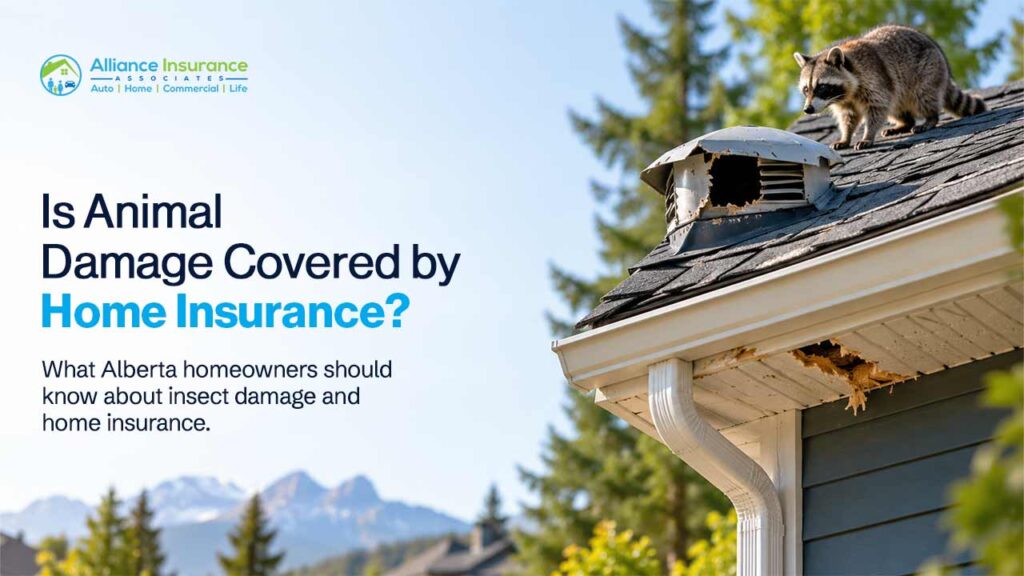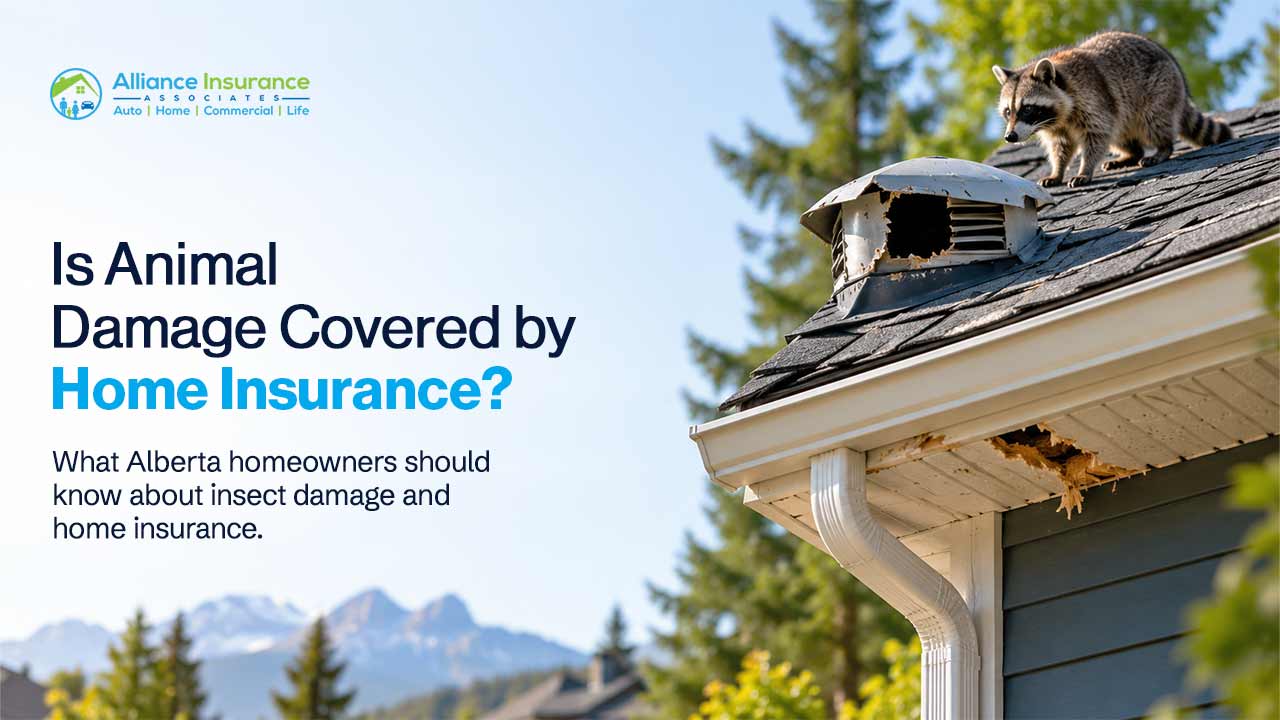

Sometimes. Home insurance in Alberta often does not cover removing animals or repairing damage from squirrels, mice, and other nesting pests because insurers see that damage as gradual and preventable. Sudden damage from larger animals or resulting damage, such as fire or water, may be covered. It depends on your policy wording.
Chewed wiring, torn insulation, or scratching in the attic can turn into a costly repair fast. Before you call a contractor, it helps to know how insurers usually treat animal damage. This guide explains it in plain language, with examples you can compare against your own policy.
Does Home Insurance Cover Animal Damage?
There is no single answer because policies differ between insurers. Three ideas explain most outcomes.
- Sudden vs. gradual damage. Home insurance is built for sudden, unexpected events. A deer crashing through a window is sudden. Squirrels nesting in your attic over several weeks is gradual, and insurers commonly exclude it.
- The animal vs. what the animal caused. Many policies will not pay to remove the animal or repair what it chewed. They may still pay for a covered event it triggered. As an Insurance Bureau of Canada representative told Rates.ca, the wire the animal damaged is not covered, but the resulting damage would be. If chewed wiring starts a fire, the fire damage may be covered even though the wiring repair is not.
- Policy type. A comprehensive policy generally covers everything not specifically excluded. A named perils policy covers only the events it lists, so animal damage would need to be listed. Ask your broker which type you have.
How Coverage Typically Works by Situation
These are common outcomes, not guarantees. Your policy wording decides.
| Situation | How it is often treated |
| Squirrels nest in the attic and chew wiring | Removal and repair are usually excluded; a resulting fire may be covered |
| A raccoon tears through the roof to get in | Roof repair may be covered; damaged furniture and contents often are not |
| Mice chew a pipe and cause a leak | Mouse damage and extermination are usually excluded; resulting water damage may be covered, depending on the policy |
| A bat colony leaves guano in the attic | Removal and cleanup are usually excluded |
| Deer breaks through a window | Often treated as sudden damage, and may be covered |
Squirrel Damage
Squirrels chew wiring, soffits, and vents, and they nest in attic insulation. Insurers usually treat this as preventable and gradual, so repairs and removal are commonly excluded. The key question is whether a covered peril followed, such as a fire.
Raccoon Damage
Raccoons often rip through roofing or vents to reach a warm space. Some policies exclude “rodents” or “vermin,” and wording varies on whether raccoons fall into those categories. Even when structural repairs are covered, personal belongings damaged inside are often not.
Mice and Rats
Mice are a realistic rodent concern in Alberta. Rats are rare here. The province has run a rat control program since 1950, and Alberta.ca reports no breeding populations for over 70 years. It is also illegal to own a pet rat in the province. If you see a real rat, report it through the provincial program (310-RATS). Many people mistake mice and muskrats for rats.
Insurers generally exclude infestation damage and extermination costs. A leak caused by a chewed pipe is a separate question, and some policies may respond to the water damage.
Bats
Removal and guano cleanup are typically excluded, and timing makes bats tricky. Bats raise pups in buildings in summer, and sealing them out then can trap the young inside. Rules differ by province. In B.C., bats are protected under the Wildlife Act, and exclusion is not allowed from May 1 to September 1. Alberta wildlife specialists also advise against excluding bats in summer. Late fall, before snow, is commonly recommended. Use a qualified wildlife professional and check current provincial rules before work begins.
Deer, Birds, and Other Wildlife
Large animals that cause one-time damage are more likely to be covered than small pests that move in. Woodpecker damage, skunks, and porcupines are usually treated as preventable and may be excluded. Check your wording.
What Animal Damage Is Commonly Excluded?
Policies often exclude:
- Damage from infestations or nesting animals
- Wear and tear, rot, or gradual deterioration
- Damage linked to poor maintenance, such as ignored gaps or holes
- Wording around “vermin,” “rodents,” “insects,” or “birds”
- Pest control and animal removal costs
- Damaged personal property, when only the building is covered
Removal, Repair, and Cleanup Are Three Different Costs
Many claims go sideways because people treat these as one cost.
- Removal: trapping or excluding the animal. Usually not covered.
- Repair: fixing chewed wiring, roofing, or vents. Depends on the cause and wording.
- Cleanup: replacing insulation and removing droppings. Often excluded, unless tied to a covered loss.
When you call your broker or insurer, describe each cost separately.
What About Damage Caused by Pets?
Damage your own pet causes to your home is typically not covered. That includes scratched floors and chewed trim, and some policies exclude any animal in your care, custody, or control. The exception is a covered event that the pet triggers, such as a fire. Liability is different. If your dog bites someone, the personal liability portion of your policy may respond, and insurers ask about breeds when you apply.
Should You Make a Claim?
Not always. Many animal-related repairs cost less than a deductible. Claims can also affect your premium or renewal options. A broker can help you weigh these before you file. Our tips for saving on home insurance explain how deductibles work.
What Should Alberta Homeowners Do After Animal Damage?
- Photograph everything before cleanup, including entry points and damaged items.
- Prevent further loss. Tarp a hole, shut off water, or block access. Keep receipts.
- Keep evidence such as damaged wiring or insulation until your insurer has seen it.
- Call your broker or insurer promptly and describe what happened in order.
- Get a written repair quote from a licensed contractor.
- Hire a qualified wildlife professional for removal and follow the timing rules for bats.
How to Prevent Animal Damage (and Protect Future Claims)
- Seal gaps, vents, and roof edges before cold weather, when animals look for shelter
- Fit screens on chimneys and vents
- Trim branches away from the roofline
- Store garbage and pet food securely
- Keep dated photos or invoices of repairs
Documented maintenance can help show that the damage was not caused by neglect.
Not Sure What Your Policy Covers?
Policy wording varies by insurer, and the difference between covered and excluded often comes down to a few phrases. Our brokers can review your policy and compare options from multiple insurers.
If you live in Alberta, start with our Alberta home insurance broker page. We also serve Calgary and Edmonton homeowners. Ready to compare? Request a quote.
This article is general information, not a coverage determination. Coverage depends on your policy wording and circumstances.
FAQ’s
Does home insurance cover squirrel damage?
Usually not. Insurers often treat squirrel damage as gradual and preventable. A covered event that follows, such as a fire from chewed wiring, may be covered.
Is raccoon damage covered by insurance?
It depends. Some policies cover structural damage, but not personal belongings. Wording about “rodents” or “vermin” can affect the outcome.
Does home insurance cover rodent damage or a mouse infestation?
Typically no. Infestation damage and extermination are commonly excluded. Resulting water or fire damage may be treated differently.
Does home insurance cover bat removal?
Usually not. Removal and guano cleanup are typically excluded, and timing rules apply.
Is animal damage covered under a named perils policy?
Only if animal damage is listed. Ask your broker whether your policy is named perils or comprehensive.
Does home insurance cover pet damage?
Generally no. Liability for injuries, such as dog bites, is handled separately.