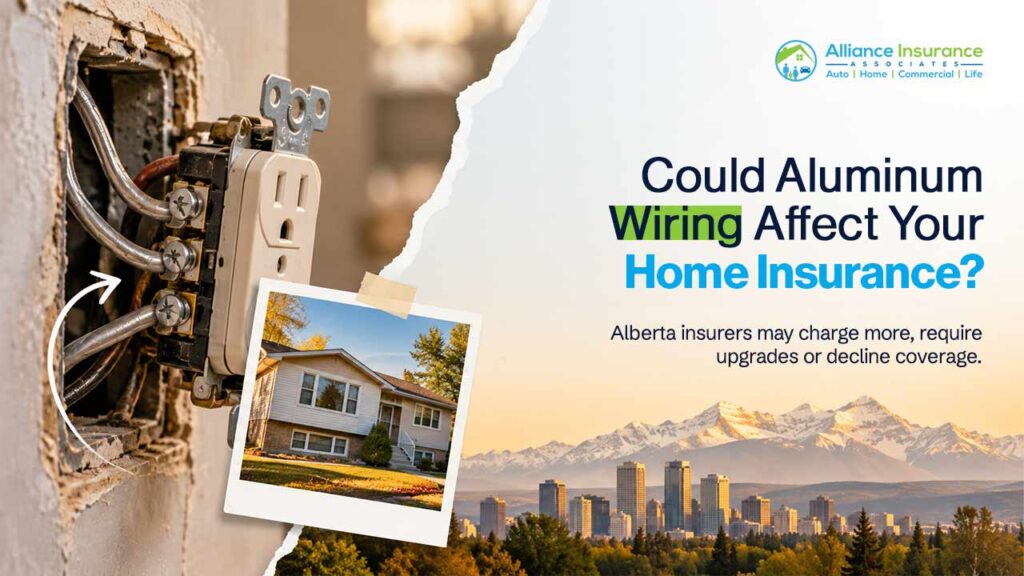

In most cases, yes, you can insure a home with aluminum wiring in Alberta. The harder question is on what terms. Some insurers accept these homes with conditions, some ask for repairs first, and some decline. Requirements vary across companies, which is why two quotes for the same house can look very different.
Quick answer
- Aluminum wiring does not automatically make a home uninsurable.
- Insurers may ask for an electrician’s inspection, proof of upgrades, or a higher premium.
- Being accepted for a policy is a separate matter from how a future claim is handled.
- Your policy wording and your insurer’s rules decide the details.
Insuring the Home vs. Paying a Claim
People often mix up two different questions.
Eligibility is underwriting. Before issuing a policy, an insurer decides whether it will take on your home’s risk and under what conditions. Aluminum wiring mostly affects this step.
Claims coverage is what the policy pays after a loss, such as a fire. That depends on the cause, the policy wording, and any conditions you agreed to, including accurate answers on your application.
This is why it matters to tell your insurer or broker about aluminum wiring upfront. A policy issued on incomplete information can create problems later. For the exact terms, read your policy or ask your broker, as this article describes general practice rather than specific wording.
Why Insurers Pay Attention to Aluminum Wiring
Solid aluminum branch-circuit wiring was installed in many Canadian homes from roughly the mid-1960s to the late 1970s. Prince Edward Island’s electrical inspectors note that it is permitted under the Canadian Electrical Code, but it must be properly maintained and assessed home by home.
The concern is mainly the connections, not the wire itself. Ontario’s Electrical Safety Authority explains that reported problems are usually found where aluminum meets switches, outlets, and other terminations. Aluminum can oxidize and loosen over time, and it may not suit devices made for copper wire. Loose connections can overheat, and that is the fire risk insurers are weighing.
How to Tell If Your House Has Aluminum Wiring
Start with what you can check without touching anything electrical.
- Home age: Houses built or renovated from the mid-1960s to the late 1970s are the most likely candidates.
- Cable markings: In places where cable is exposed, such as an unfinished basement, the jacket is often printed with the word aluminum or the letters AL.
- Paperwork: Check your home inspection report, seller disclosure, or past insurance applications.
- Warning signs: The ESA lists warm cover plates and discoloured switches or outlets as red flags. Treat these as a reason to call an electrician promptly.
Do not open panels or outlets yourself. Wiring in one house can be a mix of copper and aluminum, and a licensed electrician can identify it safely. A standard home inspection may flag aluminum wiring but usually cannot tell you how much of it there is.
What Alberta Insurers May Ask For
There is no single Alberta rule. Insurers set their own appetite, so responses tend to fall into a few patterns:
| Insurer response | What it can mean for you |
| Accepts with conditions | May include a higher premium or specific policy terms |
| Requests an inspection | An electrician’s report on the condition of connections and devices |
| Requires upgrades first | Proof of completed work, such as an invoice and a permit |
| Declines | You may need a different insurer, often through a broker |
A decline from one company is not the end of the road. Another insurer may view the same home differently. A broker who works with several companies can often find options faster than going quote by quote on your own.
Common Remediation Options
Electricians generally use one or more of these approaches, depending on the home:
- Copper pigtailing: Short copper wires are attached to the aluminum wires with approved connectors, so the device connects to copper.
- Device replacement: Switches and outlets are swapped for ones marked as suitable for aluminum wiring.
- Full rewiring: The aluminum is replaced with copper. This is the most thorough and typically the most expensive option.
Not every home needs a full rewire. The right fix depends on the condition of the system, and costs vary with the size of the home, how accessible the wiring is, and the scope of work. Get written quotes and ask your insurer whether it accepts the method you are considering before you pay for it.
Permits and Paperwork in Alberta
Alberta’s Safety Codes Act requires permits for work governed by the Canadian Electrical Code. The City of Edmonton lists the repair or replacement of aluminum wiring among the work that needs an electrical permit.
Rules and homeowner permit limits differ by municipality, so check locally. In practice, hiring a licensed electrical contractor who obtains the permit is the simplest route. Keep these records:
- The electrical permit and inspection sign-off
- The contractor’s invoice describing the work
- Any electrician’s report on the condition of the wiring
This paperwork helps with insurer approval now and with resale later.
Three Common Scenarios
Buying a home. The inspection report flags aluminum wiring. Speak with a broker before your conditions come off, so you know whether the home is insurable and what the insurer will want. Lenders typically require proof of insurance before closing.
Renewal request. Your insurer asks for an inspection after years of coverage. Ask exactly what document is required and the deadline. If the terms are unworkable, a broker can approach other insurers.
Mixed wiring after renovations. A previous owner replaced outlets with devices not suited to aluminum. Have an electrician check, since mismatched devices can create the connection problems insurers worry about.
Questions to Ask Your Broker or Insurer
- Do you accept homes with aluminum wiring, and under what conditions?
- Do you need an electrician’s report, and what must it include?
- Which remediation methods do you accept?
- Will this affect my premium, deductible, or policy terms?
- What documents should I send, and by when?
FAQ’s
Can you insure a house with aluminum wiring in Alberta?
Often, yes. Acceptance, conditions, and pricing depend on the insurer and the home’s condition.
Does aluminum wiring affect home insurance rates?
It can. Some insurers charge more or add conditions, while others may require upgrades first.
Do I have to rewire my whole house?
Not necessarily. Some insurers accept targeted remediation, but requirements vary, so confirm before starting work.
How do I know if my house has aluminum wiring?
Check the home’s age, look for cable markings where wiring is exposed, and review inspection records. A licensed electrician can confirm.
Does homeowners insurance cover a fire caused by electrical wiring?
It depends on your policy and the cause of loss. Review your policy wording or ask your broker.
Get Help Finding the Right Coverage
Have aluminum wiring in your home? Alliance Insurance Associates can help you explore home insurance options in Alberta and understand the requirements different insurers may have. Learn more about our Alberta home insurance brokers, or see local options for Calgary home insurance and Edmonton home insurance. When you are ready, request a quote or contact our team. Once your wiring is sorted, our tips for saving on home insurance can help keep your premium in check.