Category: Blog

Your blog category

  • How to Choose the Best Insurance Broker in Alberta

    How to Choose the Best Insurance Broker in Alberta

    The best insurance broker in Alberta is licensed, works with several insurers, explains how your price was built, and picks up the phone when you have a claim. That choice matters more than usual this winter because Alberta’s auto insurance system changes on January 1, 2027.

    Quick answer: five checks before you choose

    • Licence: confirm it with the Alberta Insurance Council.
    • Stability: know who owns the brokerage and which insurers will pay your claims.
    • Price: compare quotes with identical coverage and deductibles.
    • Claims: test their service before you need it.
    • Fit: ask who will actually accept your risk.

    What does an insurance broker do?

    A broker is a licensed intermediary who compares policies from several insurers, advises on coverage, and helps with changes and claims. A direct writer sells only its own products. An online marketplace compares quotes but may offer less personal advice.

    Most brokers are paid by commission from the insurer, so ask how yours is paid.

    1. Licensing and financial stability

    Anyone selling insurance in Alberta must be licensed by the Alberta Insurance Council, and licensees must carry errors and omissions insurance. General insurance licences come in Levels 1, 2 and 3, and Level 3 requires time already held at Level 2. albertaalberta

    Before you sign:

    • Ask for the broker’s full name and licence level, then verify it through the Alberta Insurance Council. The Government of Alberta’s insurance overview links to the council and explains its role. The Alberta Learning Information Service explains the licence levels.
    • Ask who owns the brokerage. Some are owned by or financed by insurers. That is not wrong, but it should be disclosed.
    • Separate the broker from the insurer. The broker advises you, but the insurer pays the claim. Ask which insurers the brokerage places business with.

    2. Pricing and discounts

    Two brokers placing you with the same insurer will usually get similar premiums. Real differences come from which insurers they can access and how well they match you to one.

    To compare fairly:

    • Request at least three quotes with identical coverage limits and deductibles.
    • Ask about discounts: bundling, claims-free history, security systems, a new roof, mortgage-free status, and sewer backup protection.
    • Ask about payment plan fees and how a higher deductible changes the price.
    • Ask whether the broker re-markets your policy at renewal, since premiums can rise even without a claim.

    For context, Surex’s published provincial averages for home insurance show Alberta at $2,304 and BC at $2,389 per year. That is a marketplace average, not a quote. Your own price depends on your address, roof, wiring, and claims history. Our Alberta home and auto savings guide and top 10 tips for saving on home insurance walk through the checklist in detail.

    3. Coverage options and benefits

    A cheap policy with the wrong coverage costs more at claim time. Ask your broker about the risks that fit your situation:

    Your situationAsk about
    Homeowner in Edmonton or CalgaryHail deductibles, sewer backup, overland water
    Condo ownerUnit improvements, loss assessment
    Basement suite or short-term rentalWhether standard policies exclude it
    Contractor or tradespersonGeneral liability, tools, builders’ risk
    Business holding customer dataCyber cover and Alberta privacy rules
    Truck or fleetCommercial auto coverage

    Workers’ compensation in Alberta runs through the WCB, not through an insurance broker. If a brokerage says it sells it, ask what exactly they mean.

    Local homeowners can read more about home insurance in Edmonton or home insurance in Calgary.

    4. Claims handling and customer service

    Your broker does not decide your claim. The insurer’s adjuster does. A good broker helps you report the loss, explains the paperwork, and pushes for answers.

    Test this before you buy:

    • Call during business hours. How long until you reach a person?
    • Ask for the after-hours claims number.
    • Ask whether you get a named contact.
    • Ask how fast they respond to policy changes.

    If something goes wrong, start with the insurer’s complaint process. The Alberta Superintendent of Insurance responds to consumer inquiries about the conduct of insurance companies, and the Alberta Insurance Council handles licensing information and complaints about licensed brokers, both through the government overview page. alberta

    5. Eligibility and underwriting

    Insurers decide who they accept, and a broker’s value shows when your file is not simple. Common reasons for a decline or a higher price:

    • Recent at-fault claims or an impaired driving conviction
    • A new move from another province or country
    • An older roof, aluminum or knob-and-tube wiring, or a wood stove
    • A vacant property or a flood-prone location
    • Higher-risk commercial classes such as trucking or certain trades

    Ask the broker which insurers would accept your situation before they start quoting. Bring proof of prior insurance, your claims history, your roof age, and your wiring type. If you are declined, ask for the reason, fix what you can, and reapply.

    What changes on January 1, 2027?

    Alberta’s Care-First auto insurance system starts on January 1, 2027, and applies to all insured drivers regardless of renewal date. Collisions before that date follow the current system, and those on or after it fall under Care-First. brokerlinknorthbridgeinsurance

    One report commissioned by the auto insurance rate regulator estimated an average saving of about $260 per vehicle per year, but drivers should not assume their premium will drop at renewal. Read the Government of Alberta’s automobile insurance reform page for official details, and ask any broker you are considering how they will explain your new benefits. rates

    Alberta vs. BC: What is different

    AlbertaBritish Columbia
    Auto insurancePrivate insurers, Care-First from Jan 2027Basic coverage through ICBC, optional coverage from private insurers
    Broker licensingAlberta Insurance CouncilInsurance Council of British Columbia
    Common home risksHail, wildfire, overland floodEarthquake, wildfire, flooding, strata rules

    If a brokerage serves both provinces, confirm that it is licensed in each one.

    Alberta brokerages worth comparing

    This list is alphabetical, not a ranking. Descriptions come from each company’s own website, so confirm details directly.

    BrokerageWhat its website highlights
    A-Kan InsuranceEdmonton-based, commercial and trucking focus
    ARC Insurance BrokersEdmonton, St. Albert, Jasper, and Burnaby, multilingual brokers
    Capital Insurance BrokersEdmonton and Stony Plain, serving since 2005, says it works with 30+ carriers
    Cornerstone InsuranceEdmonton and Calgary, personal, commercial, and life lines
    Drayden InsuranceEdmonton area, eight Alberta locations, since 1965, registry services
    iSmart InsuranceCalgary, newcomer, and Super Visa insurance
    Link InsuranceCalgary and Edmonton branches, which have operated since 1983
    SurexOnline marketplace with licensed advisors

    Looking for a career instead? PNC Learning’s guide to brokerages to work for in Canada covers employers and licensing.

    Where Alliance Insurance Associates fits

    Alliance Insurance Associates is an Edmonton-based brokerage with offices in Edmonton and Calgary, serving Alberta and British Columbia. We place auto, home, commercial, cyber, and life insurance.

    We are not the right fit for everyone. If you want a fully online quote with no conversation, a marketplace may suit you. If you want advice, a clear explanation of your price and help when something goes wrong, request a quote and compare it with any other on this page.

    Frequently asked questions

    How do I check if an insurance broker is licensed in Alberta?

    Ask for the broker’s full name and licence level, then verify it with the Alberta Insurance Council, which the Government of Alberta’s insurance overview page links to.

    Is a broker cheaper than buying directly?

    Not always. A broker can compare several insurers at once, which often finds a better match, but you should still compare quotes with identical coverage.

    Do insurance brokers charge fees?

    Most personal insurance brokers are paid by commission from the insurer. Some may charge fees for specific services, so ask before you commit.

    Will Care-First lower my car insurance premium?

    Possibly, but it is not guaranteed. Care-First starts January 1, 2027, and one regulator-commissioned estimate projects an average saving of about $260 per vehicle, though results will vary by driver.

    What is the difference between a broker and an agent?

    A broker usually represents you across several insurers. An agent may represent only one insurer. Ask any seller which insurers they can place you with.

    What if no insurer will cover me?

    Ask for the reason in writing, fix what you can (for example, wiring, roof, or paperwork), and ask your broker about specialty markets. Persistent difficulty is a signal to work with a broker experienced in complex risks.
  • Does Homeowners Insurance Cover Termite Damage in Alberta?

    Does Homeowners Insurance Cover Termite Damage in Alberta?

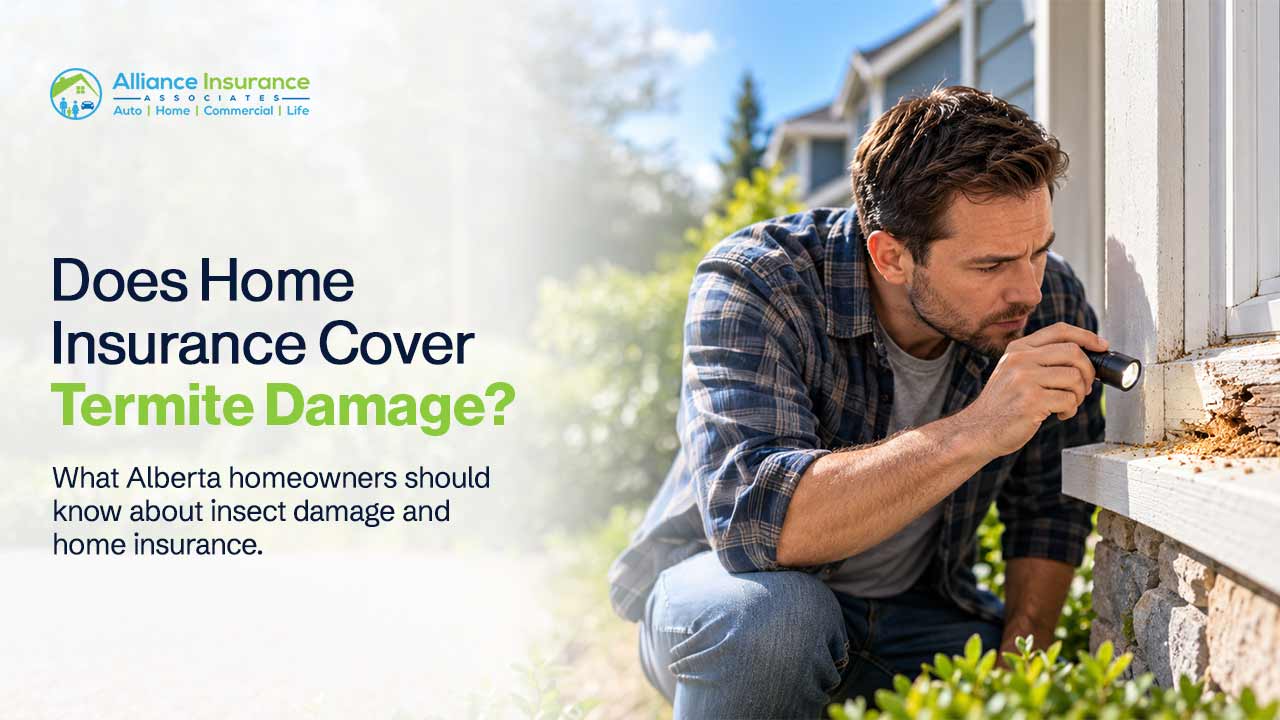
    In most cases, no. Standard Canadian home insurance policies typically exclude damage caused by termites and other insects, along with the cost of removing them. Insurers treat infestations as gradual, preventable maintenance issues. A separate sudden loss that pests set off, such as a fire, may still be covered. Your exact policy wording decides, so it is worth checking before you need it.

    Does Homeowners Insurance Cover Termite Damage?

    Home insurance exists to pay for sudden and accidental loss, such as a fire, a burst pipe, or a windstorm. Termite damage is neither. It builds slowly, often out of sight, and insurers view it as something regular upkeep and inspection can prevent.

    Most Alberta home policies therefore exclude:

    • damage caused by termites and other insects
    • the cost of treatment or extermination
    • repair of wood that pests have weakened

    Wording differs between insurers. As brokers, the first thing we read is the exclusions section, not the coverage summary. An Alberta home insurance broker can walk you through yours.

    Are There Termites in Alberta?

    Termites are rare in Alberta, and that changes the real question. The City of Edmonton states that there are no termites in Edmonton. The wood-destroying insect Alberta homeowners actually face is the carpenter ant.

    British Columbia is different. The western subterranean termite is considered BC’s main termite pest, and the Canadian Wood Council notes it may be causing significant damage in the Okanagan. If you own property in BC, the termite exclusion deserves more of your attention.

    TermitesCarpenter ants
    Found in AlbertaRareCommon
    How they damage woodFeed on itTunnel through it to nest
    Common clueMud shelter tubesSawdust-like shavings

    Does Home Insurance Cover Carpenter Ant Damage?

    Usually not, for the same reasons. The damage is gradual, and insurers classify it as maintenance.

    Moisture is the detail that matters. Alberta Health Services says carpenter ants found indoors can signal a moisture problem. The City of Edmonton adds that related “moisture ants” turn up in homes that have had water damage. A pest problem often traces back to an earlier leak, and how that leak was handled can affect what coverage is available.

    Does Home Insurance Cover Termite or Pest Treatment?

    Almost never. Extermination, inspections, and sealing entry points are considered routine home maintenance.

    Some pest control companies offer their own service guarantees. These typically promise re-treatment, not structural repairs, and they are not insurance. Read the terms before assuming one pays for repairs.

    What About Structural Damage?

    This is the expensive part, and where homeowners most hope for coverage. Damage to framing, joists, or subfloors caused directly by insects is generally excluded.

    Some policies may respond if hidden damage leads to a sudden collapse, but wording varies. Insurers often ask when you first noticed signs and what you did about them. Ask your broker how your policy treats collapse.

    When Could Insurance Cover Pest-Related Damage?

    The pest damage itself is one thing. A separate sudden loss that pests trigger is another. Policies tend to handle it in one of three ways:

    1. Blanket exclusion: pest-related loss is excluded, whatever the result.
    2. Exclusion with exceptions: pest damage is excluded, but a resulting fire or water escape stays covered.
    3. Unclear wording: this is where claim disputes tend to start.
    ScenarioPossible outcome
    Pests chew through wiring, and a fire followsThe fire damage may be covered. The pest damage and removal are usually not
    A pest-damaged pipe burstsWater damage may be covered under some policies. Pest repairs are not
    Wind damages the roof, and pests move inThe storm damage may be covered. The later infestation is likely not
    A slow leak feeds an ant colonyOften excluded, since gradual leaks commonly are

    These are examples, not promises. The outcome depends on your policy and the facts of the loss.

    What to Do If You Find Termites or Carpenter Ants

    1. Photograph the damage and the insects before cleaning up or opening walls.
    2. Have a licensed pest professional identify the insect and give you a written report.
    3. Call your broker before starting repairs if a leak, fire or storm may be involved.
    4. Keep invoices and a timeline of when you first noticed signs.

    Not sure whether your home insurance covers termite-related damage? Speak with an Alberta insurance broker to review your coverage and options. Whether you need home insurance in Edmonton or home insurance in Calgary, our team can review your policy with you.

    What Should Alberta Homeowners Check in Their Policy?

    Bring these questions to your next policy review:

    • How does the policy define “insects” and “vermin”?
    • Is resulting fire or water damage carved out of the pest exclusion?
    • What does the collapse wording say?
    • How does it treat sudden water escape versus a long-running leak?
    • Is there any endorsement that addresses pests? These are not common, so ask rather than assume.
    • What is your deductible? Our tips for saving on home insurance explain how it affects your premium.

    How to Reduce Your Risk

    Prevention is your best protection, because the cost of pest damage usually falls on you.

    • Repair leaks and damp areas promptly. Moisture is the common thread.
    • Clear stumps, logs, and wood debris from your yard.
    • Keep firewood outside and away from the house.
    • Trim branches that touch the roof or walls.
    • Call a professional if you see sawdust-like shavings or winged ants indoors.

    Want a second opinion on your coverage? Contact our team or request a home insurance quote.

    Frequently Asked Questions

    Does homeowners insurance cover termite damage in Alberta?

    Usually not. Most home policies exclude insect damage because it is gradual and preventable. A sudden resulting loss, such as a fire, may be treated differently. Check your policy wording or ask a broker.

    Does home insurance cover pest control?

    Typically no. Extermination and inspections are treated as routine maintenance. Some pest companies offer service guarantees, but these are usually limited to re-treatment and are separate from insurance.

    Is carpenter ant damage covered by homeowners insurance?

    Generally no. Insurers treat it as gradual damage and a maintenance issue. If a covered event, such as a sudden water escape, is also involved, ask your insurer how it applies.

    Does tenant insurance cover pest damage?

    No. Tenant insurance protects your belongings and liability, not the building. Under Alberta Health Services guidance, landlords must keep rental homes pest-free.

    Will a pest-related claim raise my premium?

    It can. Any claim may affect renewal pricing, depending on your insurer and claims history. A broker can explain your options before you file.

    Are termites a problem in Alberta?

    Rarely. The City of Edmonton says there are no termites in Edmonton. Carpenter ants are the more common wood-damaging insect in Alberta homes.


  • Does Home Insurance Cover Animal and Wildlife Damage in Alberta?

    Does Home Insurance Cover Animal and Wildlife Damage in Alberta?

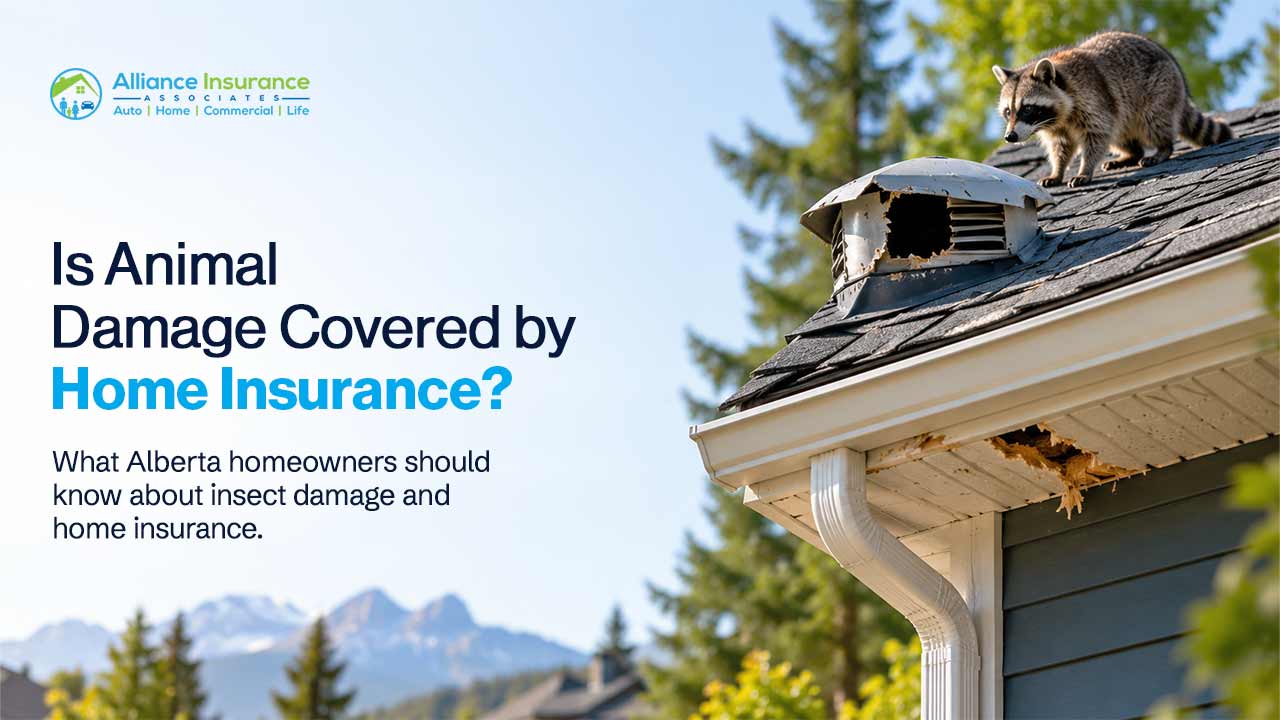
    Sometimes. Home insurance in Alberta often does not cover removing animals or repairing damage from squirrels, mice, and other nesting pests because insurers see that damage as gradual and preventable. Sudden damage from larger animals or resulting damage, such as fire or water, may be covered. It depends on your policy wording.

    Chewed wiring, torn insulation, or scratching in the attic can turn into a costly repair fast. Before you call a contractor, it helps to know how insurers usually treat animal damage. This guide explains it in plain language, with examples you can compare against your own policy.

    Does Home Insurance Cover Animal Damage?

    There is no single answer because policies differ between insurers. Three ideas explain most outcomes.

    1. Sudden vs. gradual damage. Home insurance is built for sudden, unexpected events. A deer crashing through a window is sudden. Squirrels nesting in your attic over several weeks is gradual, and insurers commonly exclude it.
    2. The animal vs. what the animal caused. Many policies will not pay to remove the animal or repair what it chewed. They may still pay for a covered event it triggered. As an Insurance Bureau of Canada representative told Rates.ca, the wire the animal damaged is not covered, but the resulting damage would be. If chewed wiring starts a fire, the fire damage may be covered even though the wiring repair is not.
    3. Policy type. A comprehensive policy generally covers everything not specifically excluded. A named perils policy covers only the events it lists, so animal damage would need to be listed. Ask your broker which type you have.

    How Coverage Typically Works by Situation

    These are common outcomes, not guarantees. Your policy wording decides.

    SituationHow it is often treated
    Squirrels nest in the attic and chew wiringRemoval and repair are usually excluded; a resulting fire may be covered
    A raccoon tears through the roof to get inRoof repair may be covered; damaged furniture and contents often are not
    Mice chew a pipe and cause a leakMouse damage and extermination are usually excluded; resulting water damage may be covered, depending on the policy
    A bat colony leaves guano in the atticRemoval and cleanup are usually excluded
    Deer breaks through a windowOften treated as sudden damage, and may be covered

    Squirrel Damage

    Squirrels chew wiring, soffits, and vents, and they nest in attic insulation. Insurers usually treat this as preventable and gradual, so repairs and removal are commonly excluded. The key question is whether a covered peril followed, such as a fire.

    Raccoon Damage

    Raccoons often rip through roofing or vents to reach a warm space. Some policies exclude “rodents” or “vermin,” and wording varies on whether raccoons fall into those categories. Even when structural repairs are covered, personal belongings damaged inside are often not.

    Mice and Rats

    Mice are a realistic rodent concern in Alberta. Rats are rare here. The province has run a rat control program since 1950, and Alberta.ca reports no breeding populations for over 70 years. It is also illegal to own a pet rat in the province. If you see a real rat, report it through the provincial program (310-RATS). Many people mistake mice and muskrats for rats.

    Insurers generally exclude infestation damage and extermination costs. A leak caused by a chewed pipe is a separate question, and some policies may respond to the water damage.

    Bats

    Removal and guano cleanup are typically excluded, and timing makes bats tricky. Bats raise pups in buildings in summer, and sealing them out then can trap the young inside. Rules differ by province. In B.C., bats are protected under the Wildlife Act, and exclusion is not allowed from May 1 to September 1. Alberta wildlife specialists also advise against excluding bats in summer. Late fall, before snow, is commonly recommended. Use a qualified wildlife professional and check current provincial rules before work begins.

    Deer, Birds, and Other Wildlife

    Large animals that cause one-time damage are more likely to be covered than small pests that move in. Woodpecker damage, skunks, and porcupines are usually treated as preventable and may be excluded. Check your wording.

    What Animal Damage Is Commonly Excluded?

    Policies often exclude:

    • Damage from infestations or nesting animals
    • Wear and tear, rot, or gradual deterioration
    • Damage linked to poor maintenance, such as ignored gaps or holes
    • Wording around “vermin,” “rodents,” “insects,” or “birds”
    • Pest control and animal removal costs
    • Damaged personal property, when only the building is covered

    Removal, Repair, and Cleanup Are Three Different Costs

    Many claims go sideways because people treat these as one cost.

    • Removal: trapping or excluding the animal. Usually not covered.
    • Repair: fixing chewed wiring, roofing, or vents. Depends on the cause and wording.
    • Cleanup: replacing insulation and removing droppings. Often excluded, unless tied to a covered loss.

    When you call your broker or insurer, describe each cost separately.

    What About Damage Caused by Pets?

    Damage your own pet causes to your home is typically not covered. That includes scratched floors and chewed trim, and some policies exclude any animal in your care, custody, or control. The exception is a covered event that the pet triggers, such as a fire. Liability is different. If your dog bites someone, the personal liability portion of your policy may respond, and insurers ask about breeds when you apply.

    Should You Make a Claim?

    Not always. Many animal-related repairs cost less than a deductible. Claims can also affect your premium or renewal options. A broker can help you weigh these before you file. Our tips for saving on home insurance explain how deductibles work.

    What Should Alberta Homeowners Do After Animal Damage?

    1. Photograph everything before cleanup, including entry points and damaged items.
    2. Prevent further loss. Tarp a hole, shut off water, or block access. Keep receipts.
    3. Keep evidence such as damaged wiring or insulation until your insurer has seen it.
    4. Call your broker or insurer promptly and describe what happened in order.
    5. Get a written repair quote from a licensed contractor.
    6. Hire a qualified wildlife professional for removal and follow the timing rules for bats.

    How to Prevent Animal Damage (and Protect Future Claims)

    • Seal gaps, vents, and roof edges before cold weather, when animals look for shelter
    • Fit screens on chimneys and vents
    • Trim branches away from the roofline
    • Store garbage and pet food securely
    • Keep dated photos or invoices of repairs

    Documented maintenance can help show that the damage was not caused by neglect.

    Not Sure What Your Policy Covers?

    Policy wording varies by insurer, and the difference between covered and excluded often comes down to a few phrases. Our brokers can review your policy and compare options from multiple insurers.

    If you live in Alberta, start with our Alberta home insurance broker page. We also serve Calgary and Edmonton homeowners. Ready to compare? Request a quote.

    This article is general information, not a coverage determination. Coverage depends on your policy wording and circumstances.

    FAQ’s

    Does home insurance cover squirrel damage?

    Usually not. Insurers often treat squirrel damage as gradual and preventable. A covered event that follows, such as a fire from chewed wiring, may be covered.

    Is raccoon damage covered by insurance?

    It depends. Some policies cover structural damage, but not personal belongings. Wording about “rodents” or “vermin” can affect the outcome.

    Does home insurance cover rodent damage or a mouse infestation?

    Typically no. Infestation damage and extermination are commonly excluded. Resulting water or fire damage may be treated differently.

    Does home insurance cover bat removal?

    Usually not. Removal and guano cleanup are typically excluded, and timing rules apply.

    Is animal damage covered under a named perils policy?

    Only if animal damage is listed. Ask your broker whether your policy is named perils or comprehensive.

    Does home insurance cover pet damage?

    Generally no. Liability for injuries, such as dog bites, is handled separately.

  • Does Home Insurance Cover Aluminum Wiring in Alberta?

    Does Home Insurance Cover Aluminum Wiring in Alberta?

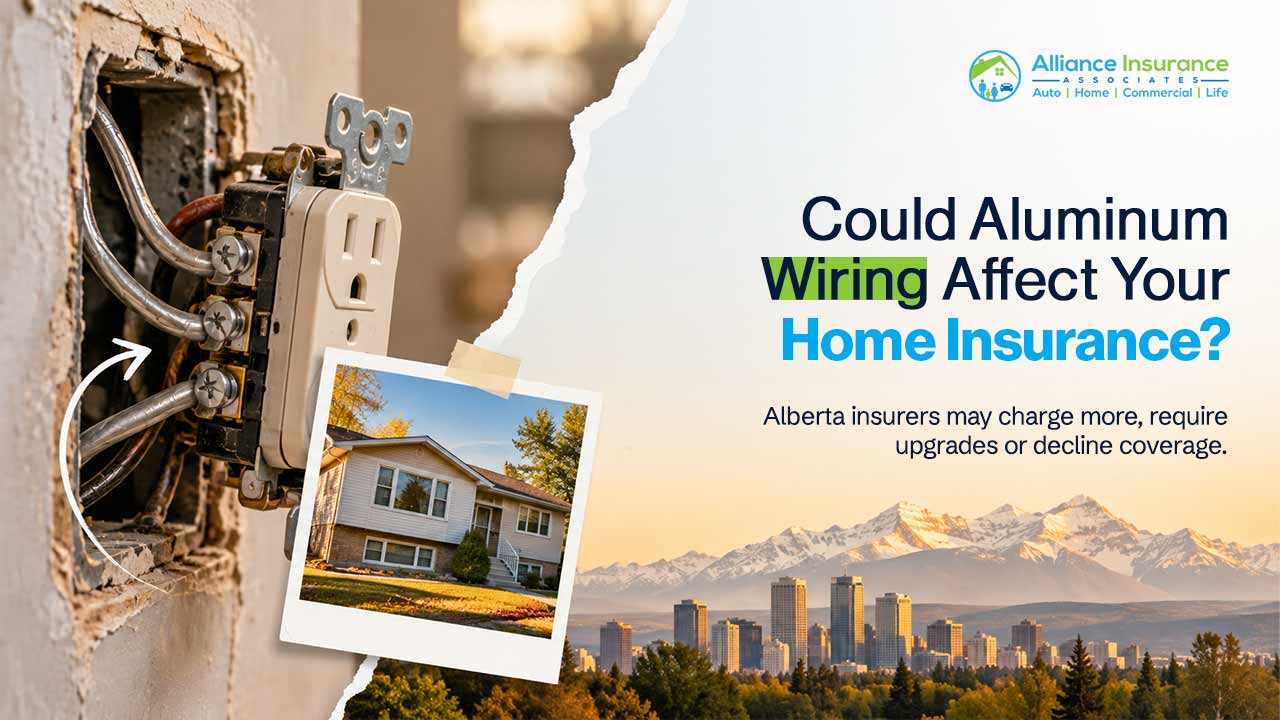
    In most cases, yes, you can insure a home with aluminum wiring in Alberta. The harder question is on what terms. Some insurers accept these homes with conditions, some ask for repairs first, and some decline. Requirements vary across companies, which is why two quotes for the same house can look very different.

    Quick answer

    • Aluminum wiring does not automatically make a home uninsurable.
    • Insurers may ask for an electrician’s inspection, proof of upgrades, or a higher premium.
    • Being accepted for a policy is a separate matter from how a future claim is handled.
    • Your policy wording and your insurer’s rules decide the details.

    Insuring the Home vs. Paying a Claim

    People often mix up two different questions.

    Eligibility is underwriting. Before issuing a policy, an insurer decides whether it will take on your home’s risk and under what conditions. Aluminum wiring mostly affects this step.

    Claims coverage is what the policy pays after a loss, such as a fire. That depends on the cause, the policy wording, and any conditions you agreed to, including accurate answers on your application.

    This is why it matters to tell your insurer or broker about aluminum wiring upfront. A policy issued on incomplete information can create problems later. For the exact terms, read your policy or ask your broker, as this article describes general practice rather than specific wording.

    Why Insurers Pay Attention to Aluminum Wiring

    Solid aluminum branch-circuit wiring was installed in many Canadian homes from roughly the mid-1960s to the late 1970s. Prince Edward Island’s electrical inspectors note that it is permitted under the Canadian Electrical Code, but it must be properly maintained and assessed home by home.

    The concern is mainly the connections, not the wire itself. Ontario’s Electrical Safety Authority explains that reported problems are usually found where aluminum meets switches, outlets, and other terminations. Aluminum can oxidize and loosen over time, and it may not suit devices made for copper wire. Loose connections can overheat, and that is the fire risk insurers are weighing.

    How to Tell If Your House Has Aluminum Wiring

    Start with what you can check without touching anything electrical.

    • Home age: Houses built or renovated from the mid-1960s to the late 1970s are the most likely candidates.
    • Cable markings: In places where cable is exposed, such as an unfinished basement, the jacket is often printed with the word aluminum or the letters AL.
    • Paperwork: Check your home inspection report, seller disclosure, or past insurance applications.
    • Warning signs: The ESA lists warm cover plates and discoloured switches or outlets as red flags. Treat these as a reason to call an electrician promptly.

    Do not open panels or outlets yourself. Wiring in one house can be a mix of copper and aluminum, and a licensed electrician can identify it safely. A standard home inspection may flag aluminum wiring but usually cannot tell you how much of it there is.

    What Alberta Insurers May Ask For

    There is no single Alberta rule. Insurers set their own appetite, so responses tend to fall into a few patterns:

    Insurer responseWhat it can mean for you
    Accepts with conditionsMay include a higher premium or specific policy terms
    Requests an inspectionAn electrician’s report on the condition of connections and devices
    Requires upgrades firstProof of completed work, such as an invoice and a permit
    DeclinesYou may need a different insurer, often through a broker

    A decline from one company is not the end of the road. Another insurer may view the same home differently. A broker who works with several companies can often find options faster than going quote by quote on your own.

    Common Remediation Options

    Electricians generally use one or more of these approaches, depending on the home:

    • Copper pigtailing: Short copper wires are attached to the aluminum wires with approved connectors, so the device connects to copper.
    • Device replacement: Switches and outlets are swapped for ones marked as suitable for aluminum wiring.
    • Full rewiring: The aluminum is replaced with copper. This is the most thorough and typically the most expensive option.

    Not every home needs a full rewire. The right fix depends on the condition of the system, and costs vary with the size of the home, how accessible the wiring is, and the scope of work. Get written quotes and ask your insurer whether it accepts the method you are considering before you pay for it.

    Permits and Paperwork in Alberta

    Alberta’s Safety Codes Act requires permits for work governed by the Canadian Electrical Code. The City of Edmonton lists the repair or replacement of aluminum wiring among the work that needs an electrical permit.

    Rules and homeowner permit limits differ by municipality, so check locally. In practice, hiring a licensed electrical contractor who obtains the permit is the simplest route. Keep these records:

    • The electrical permit and inspection sign-off
    • The contractor’s invoice describing the work
    • Any electrician’s report on the condition of the wiring

    This paperwork helps with insurer approval now and with resale later.

    Three Common Scenarios

    Buying a home. The inspection report flags aluminum wiring. Speak with a broker before your conditions come off, so you know whether the home is insurable and what the insurer will want. Lenders typically require proof of insurance before closing.

    Renewal request. Your insurer asks for an inspection after years of coverage. Ask exactly what document is required and the deadline. If the terms are unworkable, a broker can approach other insurers.

    Mixed wiring after renovations. A previous owner replaced outlets with devices not suited to aluminum. Have an electrician check, since mismatched devices can create the connection problems insurers worry about.

    Questions to Ask Your Broker or Insurer

    • Do you accept homes with aluminum wiring, and under what conditions?
    • Do you need an electrician’s report, and what must it include?
    • Which remediation methods do you accept?
    • Will this affect my premium, deductible, or policy terms?
    • What documents should I send, and by when?


    FAQ’s

    Can you insure a house with aluminum wiring in Alberta?

    Often, yes. Acceptance, conditions, and pricing depend on the insurer and the home’s condition.

    Does aluminum wiring affect home insurance rates?

     It can. Some insurers charge more or add conditions, while others may require upgrades first.

    Do I have to rewire my whole house?

     Not necessarily. Some insurers accept targeted remediation, but requirements vary, so confirm before starting work.

    How do I know if my house has aluminum wiring?

     Check the home’s age, look for cable markings where wiring is exposed, and review inspection records. A licensed electrician can confirm.

    Does homeowners insurance cover a fire caused by electrical wiring?

     It depends on your policy and the cause of loss. Review your policy wording or ask your broker.

    Get Help Finding the Right Coverage

    Have aluminum wiring in your home? Alliance Insurance Associates can help you explore home insurance options in Alberta and understand the requirements different insurers may have. Learn more about our Alberta home insurance brokers, or see local options for Calgary home insurance and Edmonton home insurance. When you are ready, request a quote or contact our team. Once your wiring is sorted, our tips for saving on home insurance can help keep your premium in check.

  • Does Homeowners Insurance Cover Bed Bugs in Alberta?

    Does Homeowners Insurance Cover Bed Bugs in Alberta?

    In most cases, no. Standard Alberta home insurance policies typically exclude bed bug treatment and extermination because insurers treat infestations as a maintenance issue rather than a sudden, accidental loss. Coverage depends on your insurer and policy wording, so check your exclusions or ask your broker before you pay for treatment.

    Finding bed bugs in your bedroom is stressful enough. Then comes the next worry: who pays for the treatment?

    Bed bugs are not rare in Alberta. Calgary and Edmonton both made Orkin Canada’s list of the country’s 25 ‘bed buggiest’ cities in 2024, which was based on the company’s own 2023 treatment counts. That is not an official tally, but it shows how common treatment calls are in our two biggest cities.

    This guide explains what home insurance typically covers, where the grey areas are, and what to do before you pay or file.

    Does Homeowners Insurance Cover Bed Bugs?

    Usually not. Home insurance in Canada is built around sudden and unexpected losses to your home, belongings, and liability. It generally does not pay for wear and tear or damage that comes from poor maintenance, as Aviva Canada explains, and pest infestations commonly sit in that excluded group.

    That can feel unfair because bed bugs usually arrive by accident. They travel with luggage, clothing, used furniture, and visitors’ belongings, and they are not a sign of a dirty home. But insurers do not decide coverage based on blame. They look at whether the loss was sudden and insured, or an ongoing condition a homeowner is expected to manage.

    Wording varies between insurers, so treat what follows as the typical pattern, not a guarantee.

    Cost or lossTypically covered?Why
    Inspection and exterminationTypically notTreated as maintenance
    Heat treatment or fumigationTypically notSame reasoning as extermination
    Replacing infested mattresses and furnitureUsually notThe infestation itself is excluded
    Hotel stay during treatmentUnlikelyLiving expense coverage is usually tied to an insured loss
    Fire or other damage during a treatment mishapMay dependFire is usually a covered peril, but the insurer reviews the circumstances

    Does Home Insurance Cover Bed Bug Treatment?

    In most standard policies, no. Inspection, extermination, heat treatment, and fumigation are generally treated as maintenance costs, much like routine pest control.

    Costs depend on the size of your home, how far the infestation has spread, and the method used. Treatment often needs follow-up visits, so the total can climb.

    Here is an illustrative example, not a quote. If your deductible is $1,000 and a treatment costs $900, there is nothing left to claim, even if your policy did respond. If the bill is higher, a claim could still affect your claims history and renewal pricing. Our guide to how deductibles and other choices affect your premium explains why that trade-off matters.

    Does Home Insurance Cover Damage Caused by Bed Bugs?

    Bed bugs feed on people and rarely damage a home’s structure. The real losses are usually mattresses, bedding, upholstered furniture, and clothing that you replace after treatment.

    Because the infestation itself is typically excluded, the items lost to it usually are too. Contents coverage is designed for events such as fire, theft, or water damage, not infestations.

    There is one grey area worth knowing about. Some Canadian brokers say that if a pest problem leads to a covered event, such as a fire, that damage may still be considered even though the pest problem is not. Others say resulting damage is excluded as well. Both views appear in current broker guidance, which is why your exact policy wording matters more than any general rule.

    For example, a fire started by a misused heater or fogger during DIY treatment is a sudden event. Fire is usually a covered peril, but the insurer will review the circumstances and your wording.

    Why Are Bed Bugs Often Excluded From Home Insurance?

    Most Alberta home policies follow the same logic:

    • Not sudden or accidental. Infestations develop over days or weeks, not in a single insured event.
    • Seen as maintenance. Insurers expect homeowners to handle upkeep, and damage tied to poor maintenance is a common exclusion.
    • Hard to verify. Where an infestation started and how long it has been there is difficult to prove, and treatments can fail and repeat.

    What About Pest Control Coverage?

    The same logic applies to other pests. Mice, termites, cockroaches, and insects are generally excluded, and routine pest control is considered maintenance.

    Some insurers may offer limited endorsements or add-ons for certain situations, but they are not common and vary by company. If this matters to you, ask your broker what is available before you need it, since coverage usually cannot be added once a problem has been discovered.

    Can You Make a Home Insurance Claim for Bed Bugs?

    You can always ask, but a claim for treatment alone is unlikely to succeed under a standard policy. Before you file, consider:

    • Whether your policy mentions infestation, vermin, or insects in its exclusions
    • Whether the cost clearly exceeds your deductible
    • Whether a sudden insured event, such as a fire, is involved
    • How a claim could affect your claims history and renewal

    A quick call to your broker costs nothing and can save you from an unnecessary claim.

    Bed Bugs in Condos, Rentals, and Short-Term Stays

    • Condo owners: Responsibility often depends on your condo bylaws and where the infestation is. Your unit owner policy and the condo corporation’s policy do different jobs, so ask about both.
    • Landlords: Treating an infested rental unit is typically a maintenance cost for the owner, so do not assume the property policy will respond.
    • Tenants: Renter’s policies tend to follow the same exclusion logic. Who pays for treatment in a rental is usually a landlord-tenant question, and Alberta Health Services’ Environmental Public Health offices can point renters to next steps.
    • Guests and short-term rentals: Do not assume an infestation brought in by a guest is covered.

    What Should You Do If You Find Bed Bugs?

    1. Confirm it. Photograph insects, stains, or droppings. A pest professional can verify what you have found.
    2. Limit the spread. Avoid moving bedding and furniture between rooms. Washing and drying fabrics on high heat helps.
    3. Book a licensed pest control provider. Alberta Health Services publishes guidance on treating a bed bug infestation, and Health Canada offers pest control resources too.
    4. Keep records. Save photos, inspection reports, invoices, dates, and a list of discarded items.
    5. Review your policy and call your broker before filing.

    To reduce the odds of a repeat, inspect second-hand furniture before bringing it home, keep luggage off beds and floors after trips, and consider mattress encasements.

    How to Check Your Home Insurance Policy for Pest Coverage

    Pull out your policy and look for:

    • Exclusions: words like infestation, vermin, insects, rodents, wear and tear, or neglect
    • Definitions: how the policy describes sudden and accidental loss
    • Contents coverage: which causes of loss it responds to
    • Endorsements: any add-ons listed on your declarations page

    Then ask your broker:

    • Does my policy exclude infestations, and does it also exclude resulting damage?
    • Is any optional pest-related coverage available?
    • How would a claim affect my renewal?

    An Alberta home insurance broker can read the wording with you. We help homeowners with home insurance in Calgary and home insurance in Edmonton, and the same wording-first approach applies to the British Columbia policies we arrange.

    Unsure what your Alberta home insurance policy covers? An insurance broker can help you understand your coverage, exclusions, and available options. Contact our team for a policy review.

    Frequently Asked Questions

    Does home insurance cover bed bug treatment in Alberta? 

    Typically no. Standard policies treat extermination as maintenance, so treatment costs are usually excluded. Wording varies by insurer, so check your exclusions or ask your broker.

    Does home insurance cover pest control? 

    Generally no. Routine pest control is treated as maintenance, though damage from a covered event such as fire may be considered separately.

    Will insurance replace a mattress or furniture ruined by bed bugs? 

    Usually not. The infestation is excluded, and contents coverage responds to insured events like fire or theft. A mattress damaged in a covered event is a different situation.

    Does condo insurance cover bed bugs? 

    Typically not for treatment. Responsibility between the owner and the corporation depends on the bylaws and where the infestation is, so review both policies.

    Does renter’s insurance cover bed bugs? 

    Renter’s policies generally follow the same exclusion logic. Who pays for treatment in a rental is usually a landlord-tenant question.

    Will a bed bug claim raise my premium? 

    It can. Claims may affect renewal pricing, and treatment costs may not exceed your deductible anyway. Ask your broker before filing.

  • Alberta Home & Auto Insurance Savings Guide 2026

    Alberta Home & Auto Insurance Savings Guide 2026

    A home and auto insurance savings checklist is a structured review of your two policies that identifies missed discounts, outdated information, and preventable risks before your renewal date. In Alberta, working through one properly can recover several hundred dollars a year, because our market prices by postal code, by hail exposure, and by a driving grid that most policyholders have never seen.

    Key Takeaways

    • Alberta homeowners’ insurance premiums rose 391.6% between December 2005 and December 2025, according to Statistics Canada data released in June 2026.
    • Bundling home and auto typically saves 5% to 20%, but it is rarely the largest saving available to an Alberta household.
    • The Good Driver Rate Cap protects clean records, and switching insurers can make you ineligible. That changes the usual “shop around every year” advice.
    • Care-First arrives January 1, 2027, with an estimated average saving of $231 per vehicle on full coverage and $366 on basic.
    • Hail is the single biggest cost driver on Alberta home policies. Roofing class and deductible structure matter more than any discount code.

    Why Alberta Premiums Behave Differently

    Most national insurance advice is written for Ontario. Alberta is a different market, and the differences are where the money is.

    FactorHow it works in Alberta
    Auto marketPrivate, regulated by the Alberta Automobile Insurance Rate Board, with more than 40 insurers writing personal vehicles
    Home marketLargely deregulated, so insurers price aggressively by postal code and risk features
    Catastrophe exposureAlberta has recorded a major hailstorm every year for a decade, totalling roughly $8 billion in damage
    Average home premiumRoughly $1,800 to $2,000 a year, up about 11.9% year over year in Q2 2026

    The August 2024 Calgary hailstorm produced more than 130,000 claims and about $3.25 billion in insured losses, making it the second-costliest disaster in Canadian history behind the 2016 Fort McMurray wildfires. That event is still working its way through Calgary and Edmonton renewal pricing.

    Step 1: Update What Changed Since Your Last Renewal

    Insurers price based on the file they have. If your file is stale, you are either overpaying or underinsured, and sometimes both.

    Work through these six items first:

    1. New valuables. Jewellery, tools, bikes, cameras, and high-end electronics often sit under a per-category sublimit. Anything valuable usually needs to be scheduled separately.
    2. Renovations. A new roof, updated wiring, replaced plumbing or a new furnace can lower your premium. A finished basement or a major addition raises your rebuild cost, so coverage needs to move up with it.
    3. Mileage. Hybrid work, a shorter commute or a second vehicle sitting idle all change your rating. Under 10,000 km a year usually opens a low-mileage or telematics option.
    4. Drivers on the policy. A newly licensed teen, a partner who now drives more, or a roommate who moved out all shift the rate.
    5. Rental or secondary use. Renting out a basement suite or listing a room changes your policy category entirely.
    6. Contact and mortgage details. Small, but a mortgage discharge can qualify you for a mortgage-free discount at some insurers.

    Ten minutes here is usually the highest return on effort in the entire checklist. If you are unsure what your current policy actually covers, our guide to what home insurance covers in Alberta breaks down the standard sections.

    Step 2: The Discounts Most Albertans Are Not Claiming

    Discounts vary by insurer and none are automatic. You have to qualify and ask.

    DiscountApplies toTypical savingWhat to have ready
    Multi-policy bundleBoth5% to 20%Both policy numbers
    Multi-vehicleAutoUp to 15%All VINs on one policy
    Winter tiresAuto2% to 5%Purchase receipt or installer invoice
    Telematics / usage-basedAutoUp to 25%Smartphone or plug-in device
    Approved driver trainingAutoVariesCourse completion certificate
    Conviction freeAutoVariesClean abstract
    Anti-theft deviceAutoVariesInstallation record
    Retiree or studentAutoVariesProof of status
    Monitored alarmHome5% to 15%Monitoring contract
    Water leak sensors, sump alarmHome2% to 10%Product details
    Claims freeHomeVariesClaims history
    Mortgage freeHome5% to 10%Discharge statement
    Pay in full annuallyBoth2% to 5%Lump sum capacity
    Non smokerHomeVariesDeclaration
    Mature homeowner (often 55+)HomeVariesDate of birth
    Association, alumni or employer groupBothVariesMembership number

    Two notes worth more than the table. First, the largest saving in most Alberta households is not a discount at all, it is moving to a better-priced insurer for that specific risk. Identical coverage can vary by hundreds of dollars between carriers. Second, a higher deductible lowers your premium but transfers risk to you, and in a hail zone that trade is less attractive than it looks.

    For deeper detail on the auto side, see our list of ways to save on your auto insurance and our top tips for saving on home insurance.

    Step 3: The Alberta Rate Rules That Decide Your Premium

    This is the section national comparison sites skip, and it is where a broker earns their keep.

    The Grid and at-fault claims

    Alberta uses a grid rating system that sets a maximum basic premium based on driving history. New drivers start at the bottom. A single at-fault claim can drop you several levels, and the effect follows you for years. That is why very minor damage is sometimes cheaper to pay out of pocket than to claim. If you are unsure how fault gets assigned, our explainer on Direct Compensation for Property Damage covers the mechanics.

    The Good Driver Rate Cap

    The cap limits how much a clean-record driver’s premium can rise. To qualify in 2026, you need:

    • No at-fault claims in the past six years
    • No criminal convictions in the past four years
    • No major convictions in the past three years
    • No minor convictions in the past three years

    Here is the part almost nobody mentions. Certain changes can end your eligibility, including moving to a higher-risk area, adding a higher-risk driver, changing vehicles or switching insurers. So the standard advice to shop every year needs a caveat in Alberta. If you are capped and your renewal increase is small, staying put can beat a slightly cheaper quote elsewhere. If your increase is steep, the cap is worth less than the switch. Run the numbers rather than following a rule of thumb.

    What changes on January 1, 2027

    Alberta introduces the Care-First auto insurance system, which moves injury claims toward faster, more predictable benefits and away from litigation. An independent actuarial report estimates average savings of $231 per vehicle for full coverage and $366 for basic coverage.

    A new rate cap arrives with it, in two parts:

    • 5% cap on insurers across their entire book of business per year
    • 10% cap on individuals at renewal from an insurer’s rate change

    The 10% cap does not protect you from increases caused by your own risk profile. A new at fault accident, a new conviction, a vehicle change or a coverage change can all push your premium past it. We cover the broader picture in our overview of what changes for Alberta insurance in 2027.

    Step 4: Hail, Water and Wildfire

    Preventing a claim beats winning one. Alberta’s loss profile is dominated by weather, and three items carry real premium weight.

    Hail. Impact-resistant roofing, often rated Class 4, earns credits with several insurers and reduces the chance of a claim in the first place. In Calgary’s north and northwest, the payback period on premium savings alone is frequently in the seven-to-ten-year range, before counting the deductible you avoid. Also check whether your policy now carries a separate or percentage-based hail and wind deductible. Many Alberta policies do, and homeowners often discover it mid-claim.

    Water. Overland water and sewer backup are usually endorsements, not standard coverage. Test your sump pump before spring melt, install a backwater valve, and keep downspouts discharging well away from the foundation. The Insurance Bureau of Canada publishes practical guidance on both.

    Wildfire. If you are in or near an interface zone, FireSmart measures such as non-combustible roofing, ember-resistant vents and a cleared perimeter affect both insurability and price.

    Winter. Keep heat consistent and insulate exposed pipes, clear gutters and roof edges to stop ice dams, shovel and salt promptly because slip and fall liability is yours, and fit true winter tires rather than all-season. Cold also kills batteries, and poor visibility causes more claims than ice does.

    Step 5: Time Your Renewal Properly

    Most people shop three days before renewal, which is too late to do it well.

    TimingAction
    60 days outRequest your renewal declaration and current declarations page
    45 days outUpdate your broker on everything from Step 1
    30 days outCompare the market on identical limits and deductibles
    14 days outConfirm discount eligibility in writing
    Renewal dayVerify the new policy is bound before the old one lapses

    A real example

    A Sherwood Park couple with a 2019 SUV and a 2004 bungalow came to us paying $4,380 combined. Nothing exotic changed. We bundled with a carrier priced better for their postal code, added winter tires and a monitored alarm, enrolled one driver in telematics, and raised the water deductible while keeping the hail deductible flat. Combined premium landed near $3,540. The single largest component was the carrier change, not the discounts.

    Common Problems and How to Solve Them

    ChallengePractical solution
    Premium jumped with no claimsAsk which rating factor changed, then compare the market before assuming it is universal
    Hail damage, but afraid to claimGet an independent roof assessment first, then weigh repair cost against your actual deductible
    Told you are ineligible for coverageAn independent broker can access markets a single insurer cannot
    Bundle quoted higher than two separate policiesIt happens. Bundling is a discount, not a guarantee of the lowest total

    Where This Is Heading

    Expect three shifts over the next two years. Care-First should ease auto pricing pressure from 2027 onward, though the effect will vary by driver. Home insurers will keep pricing hail granularly, which means roofing material becomes a pricing input rather than a maintenance decision. And telematics is moving from an optional discount to a default expectation for younger drivers.

    Alberta’s regulator publishes approved rate filings and premium data by postal code, so you can check whether your increase reflects the market or just your insurer. That transparency is new and worth using.

    Frequently Asked Questions

    How much does bundling home and auto save in Alberta? 

    Usually 5% to 20%, depending on the insurer and products combined. Always compare the bundled total against two separate policies, because the discount does not always produce the lowest overall price.

    Can I keep the Good Driver Rate Cap if I switch insurers? 

    Not necessarily. Switching insurers is one of the changes that can end eligibility, along with moving to a higher-risk area, adding a higher-risk driver, or changing vehicles. Confirm the impact before you move.

    Will Care-First actually lower my premium in 2027? 

    An independent actuarial report estimates average savings of $231 per vehicle for full coverage and $366 for basic. Pricing stays risk-based, so your result depends on your own record and vehicle.

    Is a higher deductible worth it if I live in a hail zone? 

    Only if you can comfortably pay it. Check whether your policy applies a separate percentage-based hail deductible, which can be far larger than your standard one.

    Does a hail claim raise my home insurance premium?

    It can, and it may also affect claims-free discount eligibility. Weigh the repair cost against your deductible before filing.

    How often should I review both policies? 

    Once a year at renewal, plus after any renovation, move, vehicle change, or new driver.

    Do winter tires actually earn a discount in Alberta? Most insurers offer a modest credit for true winter tires, not all-season or all-weather. Keep the invoice, since insurers ask for proof.

    Start With One Section

    You do not need to do all of this in one sitting. Update what changed, then check the discount table against your declarations page. Those two steps alone will find money for most households.

    If you want a second set of eyes, Alliance Insurance has been placing home and auto coverage across Edmonton, Calgary, and British Columbia since 2004. As independent brokers, we compare multiple insurers rather than defending one, which matters more in a hail-exposed market than it does anywhere else in the country. Learn more about our brokerage, explore our Edmonton home insurance coverage, or request a quote, and we will run your renewal against the market.

  • Alberta Cyber Insurance Guide 2026: Costs, Coverage & PIPA Requirements

    Alberta Cyber Insurance Guide 2026: Costs, Coverage & PIPA Requirements

    Cyber insurance is a commercial policy that pays the costs of responding to a data breach, ransomware attack, or system outage, including forensic investigation, customer notification, legal defence, lost income, and extortion demands. Most standard business policies exclude these losses entirely.

    If your Alberta business stores customer information, that matters more than most owners realize. Under Alberta’s Personal Information Protection Act, breach reporting is mandatory when there is a real risk of significant harm, and there is no exemption for small businesses. A three-person dental office carries the same obligation as a national retailer.

    Key Takeaways

    • Standalone cyber policies for Canadian small businesses commonly run between $500 and $3,000 per year. Add-ons to an existing policy cost less but carry much lower limits.
    • Alberta businesses report qualifying breaches to the Office of the Information and Privacy Commissioner of Alberta, not the federal Privacy Commissioner, unless they also operate across provincial borders.
    • Multi-factor authentication is now a baseline requirement. Most Canadian insurers will not quote without it.
    • Commercial general liability and property policies almost always exclude cyber losses. The gap is deliberate, not an oversight.
    • Ransomware coverage usually carries a sublimit, often around half the policy limit.

    Who Actually Needs This Coverage

    Not every business carries the same exposure. A few conditions make cyber coverage a real conversation rather than an afterthought:

    • You accept card or online payments
    • You store customer names, addresses, or payment details digitally
    • Your team works from cloud software, email, or remote access
    • A two-day outage would stop you from serving clients
    • You handle sensitive files in a professional capacity, such as legal, financial, medical, or consulting work
    • A client or government contract requires proof of cyber cover before you can sign

    That last one catches people off guard. Enterprise and public sector buyers increasingly ask for a certificate of cyber insurance during procurement, which turns a nice-to-have into a condition of revenue. If you are reviewing your whole commercial insurance program, this belongs in the same conversation.

    What Cyber Insurance Covers

    Policies are split into two halves.

    First-party coverage pays your own costs:

    • Forensic investigation to find and contain the breach
    • Notifying affected customers and providing credit monitoring
    • Restoring data and rebuilding systems
    • Lost income during the outage, usually capped at 90 to 120 days
    • Ransomware negotiation and payment, subject to sublimits

    Third-party coverage pays when someone comes after you:

    • Legal defence and settlements from customers whose data was exposed
    • Regulatory investigation costs and, in some policies, fines
    • Claims from partners or vendors affected by your breach

    Social engineering and funds transfer fraud are usually optional add-ons rather than core coverage. Given how often invoice redirection scams succeed, that endorsement earns its keep for anyone who pays suppliers by transfer.

    What It Costs in Alberta

    Premiums are calculated, not quoted from a rate card. Underwriters look at three main variables: your gross annual revenue, your industry, and the volume of personal records you hold.

    Business profileTypical limitAnnual premium range
    Cyber endorsement on existing policy$50,000 to $100,000$100 to $200
    Sole practitioner or small consultancy$250,000$500 to $1,000
    Retail or trades, under $1M revenue$500,000$800 to $1,800
    Professional office, 10 to 25 staff$1,000,000$1,500 to $4,000
    Healthcare, legal, or e-commerce$1,000,000+$3,000 to $7,500

    Ranges reflect typical Canadian small business pricing and vary by insurer, claims history, and controls in place.

    Put that against the exposure. IBM research puts the average Canadian data breach at around C$5.13 million, with a per-record cost near C$192. A breach touching 3,000 customer files can outrun a decade of premiums.

    What lowers your premium

    Insurers price security posture directly. The controls that move the number the most:

    1. Multi-factor authentication on email, VPN, remote desktop, and admin accounts
    2. Offline or immutable backups, tested on a schedule rather than assumed
    3. Endpoint detection and response, not just consumer antivirus
    4. Documented patching, with critical updates within 30 days
    5. Annual phishing training with recorded completion

    Businesses using a managed IT provider that maintains and documents these controls consistently qualify for better terms than those handling it informally.

    Your PIPA Reporting Obligations

    This is where Alberta differs from most of Canada, and where a lot of otherwise careful owners get caught.

    Alberta is one of three provinces with its own private sector privacy law. Under PIPA, when a breach creates a real risk of significant harm, you must report to the Office of the Information and Privacy Commissioner of Alberta without unreasonable delay and notify affected individuals directly. If your business also operates interprovincially or internationally, you report to the federal Office of the Privacy Commissioner of Canada under PIPEDA as well.

    Two details people miss:

    • There is no small business exemption. PIPA applies to every organization collecting personal information in Alberta during commercial activity, regardless of headcount.
    • You must log every breach, even the ones that do not meet the reporting threshold. An internal record is required either way.

    Notification and legal costs are exactly what cyber policies are built to absorb. Handled without coverage, a mid-sized breach eats a quarter’s profit before you have replaced a single server.

    What Cyber Insurance Does Not Cover

    An honest broker leads with the exclusions.

    Not coveredDetail
    Acts of war and state-sponsored attacksStandard exclusion, increasingly litigated
    Upgrading systems after a lossRestoration is covered, improvement is not
    Reputational loss beyond covered PR spendLong-term revenue decline is yours
    Fines were uninsurable by lawVaries by jurisdiction and policy form
    Losses from known unpatched vulnerabilitiesIf you disclosed it and did nothing, expect a fight

    One clause deserves specific attention. Many funds transfer fraud sections void coverage if staff change payment details without completing a documented verification step, such as calling the supplier on a previously confirmed number. Write that protocol down before you need it.

    What Happens When You Claim

    A realistic timeline for a ransomware event:

    • Hour 0 to 4. You call the insurer’s 24/7 breach hotline, not your IT contractor. The panel counsel and forensic firm are assigned from here.
    • Days 1 to 3. Containment and scoping. Forensics determines what was accessed and whether personal information was exposed.
    • Days 3 to 10. Legal counsel assesses the real risk of significant harm. Reporting decisions are made.
    • Day 10 to 30. Customer notification, credit monitoring, and regulator correspondence.
    • Day 30 to 90. Business interruption loss is quantified and settled.

    Calling your own vendor first is the most common way businesses damage their own claim. Coverage often depends on using the insurer’s approved panel. Our claims team walks clients through that first hour before it happens, not after.

    Why Applications Get Declined

    Cyber underwriting tightened considerably after the ransomware wave of the early 2020s. Applications commonly fail for:

    • No multi-factor authentication anywhere in the environment
    • Unsupported operating systems still in production
    • Backups stored on the same network as live data
    • Open Remote Desktop Protocol exposed to the internet
    • A prior breach with no documented remediation

    None of these are permanent barriers. Most are fixable in a few weeks, and fixing them before you apply produces a materially better quote than applying and negotiating afterward.

    Cyber Risk Across Alberta Industries

    SectorPrimary exposureTypical priority
    Professional servicesClient file confidentialityThird-party liability
    Medical and dentalHealth records under HIA and PIPANotification and regulatory
    Retail and hospitalityPoint of sale and card dataFirst-party recovery
    Construction and tradesInvoice redirection fraudFunds transfer endorsement
    Energy and oilfield servicesOperational technology and vendor accessBusiness interruption
    Technology firmsClient system accessCyber paired with tech errors and omissions

    Technology companies are a distinct case. A coding error that harms a client’s business is a professional liability claim, not a cyber claim, so those two policies need to be read together rather than bought separately.

    What Is Changing

    Alberta’s PIPA is under active review. A legislative committee delivered twelve amendment recommendations to the Assembly; government engagement ran through spring 2026, and a reformed bill is expected with Royal Assent anticipated in 2027. The likely direction includes a defined harm threshold, stronger enforcement powers, and mandatory vendor contract terms.

    Two shifts are already reshaping underwriting. Insurers are asking harder questions about supply chain and vendor access, since one compromised software provider can affect hundreds of clients at once. And AI-generated phishing has made fraudulent emails far harder for staff to spot, which is pushing training requirements from optional to expected.

    Businesses that document their privacy practices now will have an easier transition than those starting from scratch after the law changes.

    Frequently Asked Questions

    Is cyber insurance mandatory in Canada? 

    No. But breach notification is legally required under PIPEDA and Alberta’s PIPA, and many client and government contracts require proof of cyber coverage before you can sign.

    How much does cyber insurance cost for a small business in Alberta? 

    Standalone policies commonly run $500 to $3,000 per year. Higher-risk sectors such as healthcare and legal often sit between $3,000 and $7,500.

    Does cyber insurance cover ransomware payments? 

    Usually yes, as a last resort, subject to a sublimit often around 50 percent of the policy limit. Negotiation and forensic costs are typically included.

    Do I report a breach to OIPC Alberta or the federal Privacy Commissioner? 

    Alberta only operations report to the OIPC Alberta under PIPA. Businesses operating across provincial or national borders also report to the federal Office of the Privacy Commissioner under PIPEDA.

    Does my general liability policy cover a data breach? 

    Almost never. Commercial general liability and property policies were written for physical risks and typically exclude or sharply limit cyber losses. Check your policy wording rather than assuming.

    What security controls do insurers require? 

    Multi-factor authentication is effectively mandatory. Most insurers also want tested offline backups, endpoint detection, current patching, and staff phishing training.

    How much coverage does a small business need? 

    Many Alberta small businesses start at $1 million. The right figure depends on how many personal records you hold, since notification costs scale directly with record count.

    Can I add cyber to my existing business policy instead? 

    Yes, and it is cheaper. The tradeoff is much lower limits and narrower wording, which may not cover a full breach response. For most businesses holding customer data, a standalone policy is the better value.

    Getting the Right Policy

    Cyber wording is not standardized the way auto or property forms are. Two policies with identical limits can respond very differently to the same incident, which is the main argument for having a broker compare forms rather than buying whatever appears first online.

    We review your operations, your data, and your existing coverage before recommending anything. If you are weighing this alongside other business coverage, our guides on choosing an insurance broker for your business and small business insurance in Alberta are useful background.

    Ready to see numbers for your business? Request a cyber insurance quote or read more about our cyber liability insurance coverage. We serve businesses in Edmonton, Calgary, and across Alberta and British Columbia.

  • Tenant Insurance in Ontario: What Your Landlord’s Policy Doesn’t Cover

    Tenant Insurance in Ontario: What Your Landlord’s Policy Doesn’t Cover

    Ontario renter reviewing tenant insurance coverage in a bright apartment

    Renting a home, apartment, or condo in Ontario comes with an important insurance distinction: your landlord’s policy protects the building and the landlord’s financial interests, not everything inside your unit and not every risk you may face as a tenant.

    That is why tenant insurance in Ontario matters. It is designed to protect your belongings, your personal liability, and your living arrangements if an insured loss makes your rental temporarily uninhabitable.

    If you are searching for Tenant Insurance ON, tenant insurance Ontario, or affordable home insurance Ontario options for a rental, understanding this difference can help you choose coverage with greater confidence.

    Your Landlord’s Policy Protects the Building

    A landlord’s insurance policy typically protects the physical property, including the structure, plumbing, heating systems, permanent fixtures, and property belonging to the landlord.

    It may also include the landlord’s liability coverage and protection for lost rental income after certain insured losses.

    However, the landlord’s policy generally does not protect:

    • Your clothing, furniture, electronics, or personal belongings
    • Your personal liability if you accidentally cause damage
    • Your additional living expenses if you must leave the unit after an insured loss
    • Your valuables beyond the coverage available under your own policy
    • Your belongings while temporarily away from home, subject to policy terms

    The distinction is straightforward: the landlord insures the rental property. You insure your life inside it.

    The Insurance Bureau of Canada explains that tenant insurance commonly combines personal property, personal liability, and additional living expense coverage. You can review its overview of tenant and renter’s insurance coverage for additional background.

    Protect What You Own. Cover Your Liability.

    A tenant insurance policy is designed around the risks that follow you as a renter.

    Personal contents coverage

    Contents coverage helps protect your belongings against covered losses such as fire, theft, vandalism, and certain types of sudden water damage. Depending on your policy, coverage may apply both inside your rental and while your belongings are temporarily away from home.

    Your contents may include:

    • Clothing and shoes
    • Furniture and household items
    • Computers, tablets, and televisions
    • Kitchen appliances and personal electronics
    • Sporting equipment and bicycles
    • Books, tools, and personal collections

    The right contents limit is not simply the amount you think your belongings are worth today. It should reflect what you would need to replace the essentials and rebuild your day-to-day life after a serious loss.

    Personal liability coverage

    Personal liability coverage may protect you if you are legally responsible for unintentionally injuring someone or damaging someone else’s property.

    For a tenant, that could include accidental damage to:

    • Your rented unit
    • The landlord’s building
    • A neighbouring apartment or condo unit
    • Common areas of a building
    • Another person’s property

    Coverage is subject to your policy wording, exclusions, limits, and deductible. It may also provide legal defence costs when a covered claim is brought against you.

    Additional living expenses

    If an insured loss makes your rental temporarily uninhabitable, additional living expense coverage, sometimes called loss of use coverage, may help pay for necessary extra costs.

    Depending on the policy, this can include temporary accommodation, increased meal costs, storage, and other reasonable expenses while your home is being repaired.

    This coverage is not intended to improve your lifestyle or pay every expense you normally have. It is designed to help you maintain reasonable living arrangements after a covered event.

    Two neighbouring Ontario apartment units illustrating tenant liability after accidental water or fire damage

    One Incident Can Affect Two Neighbouring Units

    Consider a water escape from a washing machine, dishwasher, sink, or toilet. The water may damage your flooring and belongings, then move through walls or ceilings into the unit below.

    A kitchen fire can create a similar problem. Even if the fire starts in your unit, smoke, water, and fire damage may affect neighbouring homes and shared building areas.

    Your landlord’s policy may respond to damage to the building. But if you are found legally responsible for causing the loss, your own personal liability coverage may become important.

    This is one reason a landlord or condo owner may require proof of tenant insurance. Liability coverage helps provide a layer of protection for everyone involved, including you, the property owner, and neighbouring residents.

    Consider Optional Endorsements Carefully

    A standard tenant policy may not automatically cover every risk that matters to you. Depending on the insurer and your rental property, optional endorsements may be available for:

    Sewer backup

    Sewer backup coverage can help protect against damage caused by water backing up through drains or sewer lines. This is different from every other type of water loss, so ask how your policy treats it.

    Scheduled valuables

    Jewellery, watches, artwork, collectibles, cameras, and other high-value items may have special limits under a standard policy. Scheduling an item individually may provide broader or higher coverage, often subject to an appraisal or proof of value.

    Bicycle and theft-away-from-home coverage

    Your bicycle or sports equipment may have a sub-limit, deductible, or special conditions. Personal property away from home may be covered, but the extent of coverage depends on the policy.

    If you own items that would be difficult or expensive to replace, discuss them with an Alliance consultant rather than assuming a basic contents limit will be enough.

    Know What Tenant Insurance Does Not Cover

    Tenant insurance is valuable, but it is not a maintenance contract or a guarantee against every type of loss.

    Common exclusions or limitations may include:

    • Intentional acts: Damage deliberately caused by an insured person is generally excluded.
    • Normal wear and tear: Insurance is designed for sudden and accidental losses, not gradual deterioration or maintenance.
    • Pests and infestation: Damage caused by insects, rodents, or other pests is commonly excluded.
    • Business inventory and equipment: Property used for a home-based business may have limited coverage or may require commercial insurance.
    • High-value property above policy sub-limits: Jewellery, bicycles, electronics, cash, and collectibles may have specific limits.
    • Uninsured water losses: Sewer backup, overland water, or other water-related events may require separate endorsements.

    If you operate a business from your rental, store inventory at home, or regularly meet clients there, tell your insurance representative. A standard tenant policy may not be designed for those exposures. You may need a home-business endorsement or separate commercial insurance.

    How Much Does Tenant Insurance Cost in Ontario?

    The cost of tenant insurance in Ontario varies from one renter to another. Premiums are influenced by factors such as:

    • Your contents coverage limit
    • The liability limit you select
    • Your deductible
    • The rental property’s location and construction
    • The building’s age and claims history
    • Your personal insurance and claims history
    • Optional endorsements
    • Safety and security features at the property

    A lower premium is not always the better choice if it leaves you without enough contents coverage or the liability limit required by your lease.

    You can often adjust the deductible and coverage limits to suit your budget, but those decisions should be made deliberately. The goal is a practical, tailored policy, not simply the cheapest policy available.

    Ontario renter creating a home inventory with a smartphone and personal belongings

    Review Your Lease and Condo Requirements

    Tenant insurance is not automatically required by Ontario law in every rental. However, many landlords include an insurance requirement in the lease.

    If your rental agreement requires liability coverage, you are generally expected to maintain that coverage. Ontario’s Steps to Justice guidance explains that a lease may require tenant insurance with liability coverage, while contents insurance cannot be required in the same way.

    Rental condos can involve additional requirements. The condo corporation may have rules or bylaws that affect occupants, while the unit owner may include insurance requirements in your lease.

    When your landlord or property manager asks for proof of insurance, the certificate or policy confirmation should clearly show:

    • Your name as the insured tenant
    • The rental property address
    • The policy’s effective date and expiry date
    • The personal liability limit
    • The insurer or brokerage information
    • The policy number, where applicable

    If you move, renew your lease, or change insurers, provide updated proof when requested.

    Build a Practical Tenant Insurance Checklist

    Before purchasing or renewing tenant insurance in Ontario, take these steps:

    1. Create a home inventory. Photograph important belongings and keep receipts, appraisals, or purchase records where possible.
    2. Choose a realistic contents limit. Consider what it would cost to replace your clothing, furniture, electronics, and household essentials.
    3. Select your deductible deliberately. A higher deductible may reduce the premium, but you should be comfortable paying it after a claim.
    4. Confirm your liability requirement. Check your lease for the minimum limit requested by your landlord or property manager.
    5. Ask about endorsements. Review sewer backup, scheduled valuables, bicycles, and property away from home.
    6. Disclose home business activity. Inventory, equipment, or customer visits may need additional protection.
    7. Review annually. Your belongings, address, household members, and insurance needs can change over time.

    Choose Guidance Built Around Your Rental

    Tenant insurance in Ontario should be clear, practical, and tailored to your circumstances. It should protect what matters to you without adding coverage you do not need or leaving important gaps unexplained.

    At Alliance Insurance Associates, our consultants help Ontario renters compare coverage, understand liability protection, review policy limits, and identify practical options for their belongings and living arrangements. We focus on risk management and informed decisions, not generic insurance templates.

    Book a tenant insurance review with Alliance Insurance Associates to discuss your rental, contents, liability requirements, and available coverage options.

    Insurance consultant reviewing a tenant insurance policy with an Ontario renter

    Frequently Asked Questions

    Does my landlord’s insurance cover my belongings?

    Usually, no. The landlord’s policy generally protects the building, the landlord’s property, and the landlord’s liability. Your personal belongings require your own tenant insurance policy.

    Does tenant insurance cover accidental damage to my rental?

    Personal liability coverage may respond when you are legally responsible for accidental damage to the unit or other property. Coverage depends on the policy wording, exclusions, and limits.

    Is tenant insurance mandatory in Ontario?

    Ontario law does not require every renter to carry tenant insurance. However, a landlord may include a liability insurance requirement in the lease.

    Does tenant insurance cover a hotel if my rental becomes uninhabitable?

    Additional living expense coverage may help with necessary extra costs after a covered loss makes your rental uninhabitable. Limits and conditions apply.

    Can tenant insurance cover my business inventory?

    Business property and inventory may have limited coverage under a personal tenant policy. If you operate a business from home, discuss your activities with an insurance consultant before assuming you are fully protected.

  • Home Owners Insurance in Canada: Why Your Coverage Limit May Not Cover a Rebuild

    Home Owners Insurance in Canada: Why Your Coverage Limit May Not Cover a Rebuild

    A modern illustration of a home with rising rebuild costs, construction materials, and a building-code checklist

    Your home insurance limit may have been updated over the years, but that does not necessarily mean it reflects the true cost of rebuilding your home today.

    Construction materials, skilled labour, permits, demolition, debris removal, and building-code requirements can all affect the cost of restoring a property after a major loss. If your dwelling limit was set several years ago and only adjusted by a standard inflation factor, there may be a gap between your coverage and the actual rebuild cost.

    That does not mean you need to worry. It does mean your home owners insurance deserves a careful review, especially at renewal or after a renovation.

    At Alliance Insurance Associates, we help homeowners look beyond a policy’s headline limit. Our role is to understand your property, identify potential gaps, and help you choose practical protection for what matters most.

    Market Value and Rebuild Cost Are Different

    The market value of your home is what a buyer may be willing to pay for the property. It can include:

    • The location and neighbourhood
    • The land beneath the home
    • Nearby schools and amenities
    • Local demand
    • The age and condition of the property
    • Real estate market conditions

    The rebuild cost is different. It is the estimated cost to reconstruct the home after a covered total loss using comparable materials and current labour rates.

    For insurance purposes, the land is not rebuilt. Location-based market value is not rebuilt either. Your home insurance dwelling limit is intended to reflect the structure itself, including items such as the foundation, framing, roof, wiring, plumbing, heating systems, attached garage, and built-in features.

    The Insurance Bureau of Canada explains that a home’s replacement value may differ from its market value and municipal tax assessment. The Financial Consumer Agency of Canada also notes that a coverage limit is the maximum an insurer will pay under the policy.

    Illustration comparing market value factors with the construction costs involved in rebuilding a home

    Check What Your Dwelling Limit Is Designed to Cover

    Your policy’s dwelling limit, sometimes called building coverage, generally applies to the primary structure of your home. It may also consider attached garages and certain built-in fixtures.

    The limit should be based on current replacement or rebuild cost, not simply:

    • Your purchase price
    • Your mortgage balance
    • Your municipal tax assessment
    • The amount you paid for the property years ago
    • A basic inflation adjustment

    A rebuild-cost estimate may consider the home’s size, age, construction type, number of storeys, roofing, heating, fireplaces, custom features, and the location of the nearest fire department or hydrant.

    Your policy may also provide separate limits for detached structures, personal belongings, additional living expenses, and liability. These amounts should be reviewed alongside the dwelling limit so your coverage works as a complete plan.

    Understand Replacement Cost and Actual Cash Value

    The way a claim is settled can significantly affect the amount you receive.

    Replacement cost

    Replacement cost coverage is intended to pay the cost of repairing or replacing damaged property with new materials of similar kind and quality, subject to the policy limit and conditions.

    For a home, this may help fund reconstruction without deducting depreciation from every building component. However, you generally still need to meet the policy’s requirements, use approved settlement methods, and maintain sufficient insurance.

    For contents, replacement cost may help replace an older appliance, computer, or piece of furniture with a comparable new item rather than paying only what the older item was worth immediately before the loss.

    Actual cash value

    Actual cash value generally reflects replacement cost minus depreciation. Depreciation considers the age, condition, and expected useful life of the property.

    For example, an older roof may have a much lower actual cash value than the cost of installing a new roof. If your policy applies actual cash value to that item, the claim payment may not be enough to fund a complete replacement.

    The Financial Consumer Agency of Canada provides a helpful explanation of the difference between actual cash value and replacement value. When reviewing home insurance in Ontario, Alberta, or BC, ask which settlement basis applies to the building, contents, roof, and other important property features.

    Consider Guaranteed or Extended Replacement Cost

    Some policies offer additional protection above the stated dwelling limit. The terminology and conditions vary by insurer, so the policy wording matters.

    Guaranteed replacement cost

    Guaranteed replacement cost may provide protection if the actual cost to rebuild exceeds the dwelling limit after a covered loss. This coverage is often subject to conditions, such as:

    • The home must be insured to the insurer’s full replacement-cost estimate
    • Property information must be accurate and current
    • Renovations and improvements must be reported
    • The home must meet applicable policy requirements
    • The insurer may need to approve the rebuilding plan or contractor

    Guaranteed replacement cost is not a reason to ignore your policy limit. Keeping the limit accurate remains important.

    Extended replacement cost

    Extended replacement cost may provide a defined percentage above the dwelling limit to address unexpected cost increases. This can be helpful when a widespread event increases demand for contractors, materials, and temporary housing.

    Availability, percentages, exclusions, and conditions differ between insurance companies. A coverage review can help you understand whether this option is available and appropriate for your home.

    Look for Common Coverage Gaps

    A home may be insured at an appropriate level when the policy is first written, then become less accurately described over time. Certain changes deserve particular attention.

    Renovations and additions

    A finished basement, new bathroom, expanded kitchen, addition, or converted garage can change the cost to rebuild. Even high-quality flooring, cabinetry, windows, insulation, and electrical work may affect the replacement estimate.

    Tell your insurance representative about completed and planned renovations before work begins whenever possible.

    Custom features and specialty materials

    Custom millwork, stonework, heritage details, imported finishes, solar equipment, smart-home systems, and specialty heating systems may cost more to replace than standard materials.

    The more distinctive your home is, the more important accurate information becomes.

    Building-code upgrades

    After a major loss, rebuilding may require your home to meet current building codes and municipal requirements. This can involve upgrades to:

    • Electrical systems
    • Plumbing
    • Insulation and energy efficiency
    • Fire separation
    • Smoke and fire protection
    • Structural components
    • Accessibility or safety features

    Some policies include by-law or building-code coverage. Others may provide only a limited amount unless an endorsement is added. Ask how your policy responds to these additional costs.

    Detached structures

    Detached garages, workshops, sheds, pools, fences, gazebos, and other structures may be insured under separate limits or percentages. A new workshop or large detached garage may exceed the amount automatically provided by the policy.

    Review these structures individually if they represent a significant investment.

    Insurance consultant and homeowner reviewing a policy with renovation, roof, detached garage, and building-code considerations

    Review Your Coverage at Renewal

    A practical renewal review does not need to be complicated. Start with your declarations page and ask:

    1. What is my current dwelling limit?
    2. When was the rebuild-cost estimate last reviewed?
    3. Have I completed renovations or additions?
    4. Are custom features and specialty materials included?
    5. How are detached structures covered?
    6. Do I have replacement cost or actual cash value coverage?
    7. Is guaranteed or extended replacement cost available?
    8. What limit applies to building-code or by-law upgrades?
    9. Are my contents insured for replacement cost?
    10. Are additional living expenses sufficient for current rental and accommodation costs?

    Keep photos, invoices, renovation records, appraisals, and a home inventory in a secure location. These records can help your insurance professional understand the property and may be useful in the event of a claim.

    What Renters and Condo Owners Should Review

    Not every residence needs a homeowner’s dwelling limit.

    Renters

    If you rent a home or apartment, the landlord generally insures the building. Your tenant or renters insurance should focus on:

    • Personal belongings
    • Personal liability
    • Additional living expenses
    • Improvements or upgrades you are responsible for
    • Any business equipment or home-based business activity

    The FCAC’s home insurance guidance explains that renters should consider enough coverage to replace their possessions.

    Condo owners

    Condo or strata corporation insurance generally covers the building and common areas, but your unit-owner policy may need to cover:

    • Personal belongings
    • Improvements and betterments
    • Personal liability
    • Additional living expenses
    • Contingency coverage
    • Loss assessment coverage

    In BC, condo properties are commonly referred to as strata properties. The IBC overview of condo and strata coverage explains why the corporation’s policy and your unit-owner policy work together.

    Get a Clear, Practical Coverage Review

    Home insurance should not be based on a generic number or an outdated estimate. Your property, renovation history, location, construction type, and priorities all matter.

    Alliance Insurance Associates provides tailored home and property insurance guidance in Ontario and Alberta. In BC, we operate as Alliance Associates, offering home, property, and commercial/business insurance solutions.

    Our consultants help you compare coverage, understand settlement options, review rebuild-cost details, and identify practical gaps without adding unnecessary complexity.

    A model home held securely in caring hands, representing professional guidance and property protection

    If you are reviewing home owners insurance, property insurance in Ontario, or home insurance in Ontario, now is a good time to check whether your policy still reflects the home you own today. Homeowners in Alberta and BC can benefit from the same review: particularly after renovations, property upgrades, or changes in local construction costs.

    Book a coverage review with an Alliance consultant or learn more about our home insurance services. We are here to help you make an informed decision and feel confident that your coverage is designed around what matters most.

    This article provides general information and does not replace your insurance policy wording or advice from a licensed insurance professional. Coverage, exclusions, limits, and eligibility vary by insurer and province.