


Home insurance in Alberta covers four things: the structure of your house, the belongings inside it, your legal liability if someone is hurt on your property, and your living costs if you cannot stay in your home after a covered loss. What it does not automatically cover is water backing up through your drains, water flowing in from outside, or an earthquake. Those need separate add-ons.
That gap catches thousands of Albertans every year, usually in a flooded basement at two in the morning.
Key Takeaways
- Every standard policy includes dwelling, detached structures, contents, additional living expenses, and personal liability.
- Your policy form (comprehensive, broad, basic, or no frills) decides what “covered” actually means.
- Sewer backup and overland water are optional. If you never asked for them, you almost certainly do not have them.
- Contents coverage caps common valuables. Jewellery is often limited to $6,000 total, cash to a few hundred dollars.
- Alberta premiums climbed 11.9% year over year in Q2 2026, the steepest rise in Canada, driven by hail, wildfire, and rebuild costs.
What Is Home Insurance?
Home insurance is a contract that pays to repair or replace your property after a sudden, accidental loss, and defends you if someone holds you legally responsible for injury or damage.
It is not legally required in Alberta the way auto insurance is. It is effectively required if you have a mortgage, because lenders make it a condition of financing. The Financial Consumer Agency of Canada outlines the basics for consumers, and the Alberta Superintendent of Insurance publishes provincial guidance.
Homeowners without a mortgage are the most commonly underinsured group in the province. Nobody is checking their coverage for them.
The Five Coverages in Every Alberta Policy
1. Your Home’s Structure
This is your dwelling coverage: walls, roof, foundation, attached garage, deck, plumbing, wiring, and built in fixtures.
The limit should reflect what it costs to rebuild, not what your house would sell for. Alberta construction costs have risen sharply since 2020, and policies written before then are frequently short by tens of thousands of dollars.
2. Detached Structures
Sheds, fences, detached garages, gazebos. Coverage is usually capped at roughly 10% of your dwelling limit. If you built a $60,000 detached shop behind a $400,000 house, do the math before you assume you are covered.
3. Personal Belongings
Furniture, electronics, clothing, appliances, tools. Typically 50% to 70% of your dwelling limit. This is where sub limits bite, and we cover those below.
4. Additional Living Expenses
If a covered loss makes your home unlivable, this pays for hotels, meals, storage, and pet boarding during repairs. Alberta wildfire evacuations have triggered this coverage for entire communities at once.
5. Personal Liability
Usually $1 million or $2 million. It covers legal defence and settlements if a guest is injured on your property or your dog bites someone. It follows you off your property too, which surprises most people.
Coverage at a Glance
| Coverage | Typical Limit | Common Sub Limit |
| Dwelling | Full rebuild cost | None |
| Detached structures | ~10% of dwelling | None |
| Contents | 50–70% of dwelling | See below |
| Jewellery and watches | Within contents | $6,000 total |
| Cash and securities | Within contents | $200–$500 |
| Bicycles | Within contents | $1,000–$2,000 |
| Business equipment at home | Within contents | $2,500–$5,000 |
| Personal liability | $1M–$2M | None |
| Additional living expenses | 20–30% of dwelling | Time limited |
These are industry typical figures, not guarantees. Your declarations page is the only document that tells you your actual numbers.
Policy Forms: Why Two Quotes Are Rarely Comparable
The Insurance Bureau of Canada classifies home policies into four forms. This distinction changes the meaning of every section above.
| Form | Building | Contents | Best For |
| Comprehensive | All risk, except stated exclusions | All risk | Most homeowners |
| Broad | All risk | Named perils only | Budget conscious owners |
| Basic (named perils) | Listed perils only | Listed perils only | Cottages, renovations |
| No frills | Limited | Limited | Homes failing standard underwriting |
Under a named perils policy, you have to prove a listed peril caused the loss. Under comprehensive, the insurer has to prove an exclusion applies. That reversal matters enormously at claim time.
What Home Insurance Does Not Cover
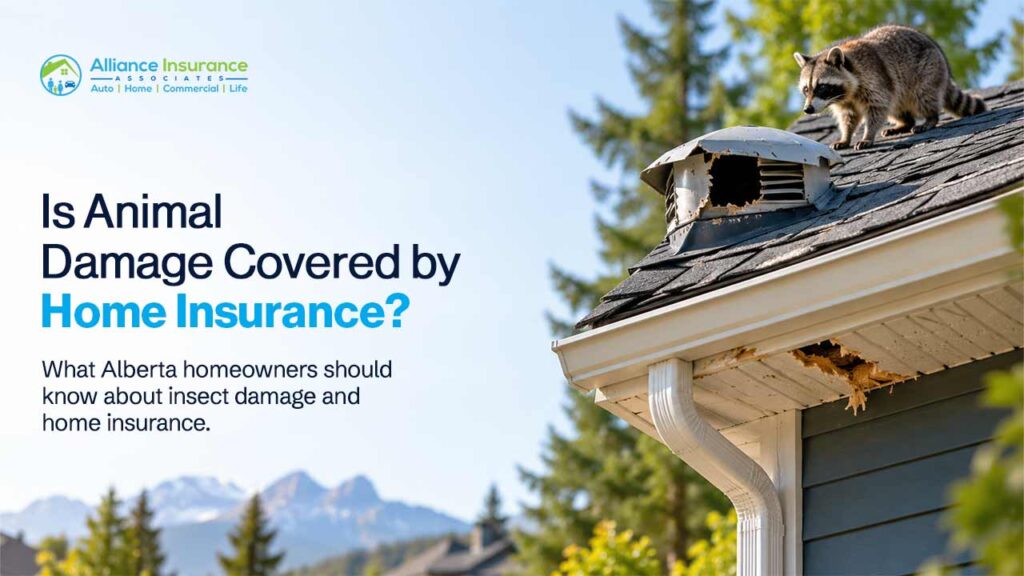
Never covered: wear and tear, poor maintenance, rust and corrosion, rodent or insect damage, mould from an ongoing leak, intentional damage, and war.
Excluded but available as an add on: sewer backup, overland water, earthquake, oil tank spills, and short term rental activity.
Covered but capped: everything in the sub limit column above.
One principle trips people up more than any other: negligence voids claims. Ignore a known leak or let your gutters back up into the foundation, and the resulting damage is your problem.
Water Damage: Where Alberta Policies Have a Hole
Water is the most common property claim in Canada. Canadian insurers paid roughly $3.1 billion in water damage claims in 2023 alone.
| Source of Water | Usually Covered? | What You Need |
| Burst pipe or appliance leak | Yes | Standard policy |
| Sewer or drain backup | No | Sewer backup endorsement |
| Overland water (rain, snowmelt) | No | Overland water endorsement |
| Groundwater seepage | No | Often uninsurable |
Real world example. A sewer backup endorsement typically costs between $30 and $100 a year. The average sewer backup claim in Canada runs $20,000 to $45,000. That is one of the strongest value propositions in the entire policy, and most homeowners decline it because nobody explained the difference.
During the 2013 Alberta floods, which produced roughly $1.7 billion in insured losses, overland flood coverage did not exist in Canada at all. It does now. Ask for it by name.
Hail, Wildfire, and Winter
Hail is generally covered under dwelling, but two things need checking: cosmetic damage exclusions, and separate wind and hail deductibles, both of which have spread across the Alberta market. Several carriers offer 20% to 40% discounts on the hail portion of your premium for Class 4 impact rated roofing.
Wildfire is covered as fire. Disputes arise over smoke damage without direct flame contact. Alberta recorded roughly $4.1 billion in weather related damage in 2024, the highest of any province.
Frozen pipes are covered when the home was reasonably heated, and denied when it was left unheated and unattended. If you spend winters somewhere warmer, read your vacancy clause.
What It Costs in Edmonton and Calgary
| City | Approximate Annual Premium |
| Edmonton | ~$1,880 |
| Calgary | ~$2,480 |
| Alberta average | ~$2,100–$2,500 |
Calgary pays more almost entirely because of hail exposure.
Best practices for lowering your premium:
- Bundle home and auto. Our home and auto savings checklist walks through the full list.
- Install a backwater valve and a sump pump with battery backup.
- Upgrade to impact rated roofing when you replace your roof anyway.
- Raise your deductible if you have savings to absorb it.
- Review annually. More tips for saving on home insurance are worth a read before renewal.
Read Your Own Policy in Ten Minutes
Pull out your declarations page and check six lines: dwelling limit, contents limit, liability limit, deductibles, the endorsement list, and the policy form.
Then ask your broker five questions:
- Is my dwelling limit still accurate at today’s rebuild costs?
- Do I have both sewer backup and overland water?
- What is my hail deductible, specifically?
- Are my valuables scheduled separately?
- Is my liability limit still appropriate?
You can confirm your broker’s licence through the Alberta Insurance Council agent lookup tool. Anyone advising you on this should be registered.
Special Situations
- Condo owners. Your policy covers unit improvements, contents, and loss assessment. The corporation’s policy covers the building envelope. The seam between them is where claims get messy.
- Renters. The landlord’s policy covers neither your belongings nor your liability.
- Home based business. Standard policies carry minimal equipment coverage, exclude equipment taken off site, and exclude client injury on your property entirely. If clients visit your home, you need commercial coverage.
Challenges Ahead
Availability is becoming a real problem in Alberta, not just price. Some Calgary homeowners in high hail postal codes have been declined by multiple carriers before finding coverage at two to three times their previous premium.
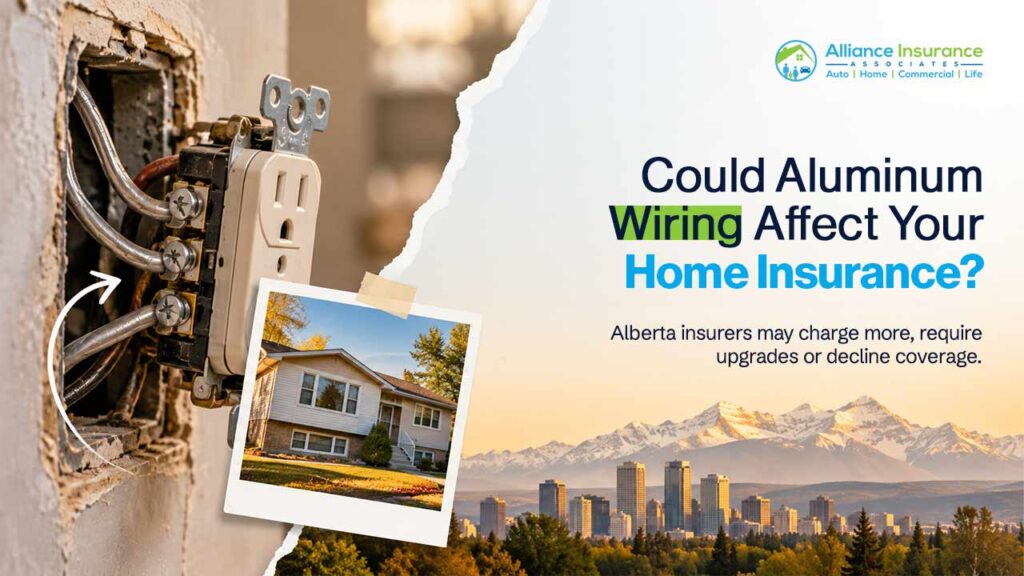
The practical response is mitigation. Impact rated roofs, backwater valves, and updated plumbing and electrical increasingly determine whether you can get a competitive quote at all.
Future Trends
Expect three shifts through 2027:
- Risk based pricing at the property level. Carriers are pricing individual roofs and postal codes rather than broad regions.
- A federal flood insurance program. Pledged for an April 2026 launch, still unlaunched as of mid 2026, targeting the roughly 10% of Canadian households considered uninsurable for flood.
- Mitigation discounts becoming standard. Verified upgrades will move from nice to have toward a pricing requirement.
Frequently Asked Questions
Is home insurance mandatory in Alberta?
No, not by law. Mortgage lenders require it as a financing condition, so most homeowners carry it regardless.
Does home insurance cover hail damage to my roof?
Usually yes, under dwelling coverage. Check for a separate hail deductible and any cosmetic damage exclusion.
Is sewer backup covered by a standard policy?
No. It requires an endorsement, typically $30 to $100 a year against average claims of $20,000 to $45,000.
Does home insurance cover overland flooding?
Only with an overland water endorsement. It is separate from sewer backup, and many homeowners need both.
How much jewellery does home insurance cover?
Commonly $6,000 in total. Schedule higher-value pieces individually with appraisals.
Does home insurance cover damage my dog causes?
Liability generally covers injury your dog causes to others. Damage your dog does to your own property is excluded.
What is the difference between replacement cost and actual cash value?
Replacement cost pays for new. Actual cash value subtracts depreciation, which is why an aging roof settled at ACV may not fund a full replacement.
Get Your Coverage Reviewed
Most people find out what their policy covers during a claim. That is the worst possible time.
Bring us your current declarations page, and we will read it against the checklist above, flag the gaps, and tell you what a fix costs. Our Edmonton home insurance brokers work with multiple Alberta carriers, so we can compare endorsement wording across insurers rather than defending one company’s product.
Call 780-490-0053 in Edmonton, 403-222-0403 in Calgary, or 236-993-0063 in BC. You can also request a quote online or review our claims support process before you need it.
Figures cited from the Insurance Bureau of Canada, Financial Consumer Agency of Canada, Applied Rating Index (Q2 2026), and published 2026 Alberta rate data. Verify premium figures before publishing.