



A construction project brings together significant investments, multiple contractors, valuable materials, and constantly changing risks. The right insurance can help protect your project from unexpected setbacks, but choosing the right coverage starts with understanding what each policy is designed to do.
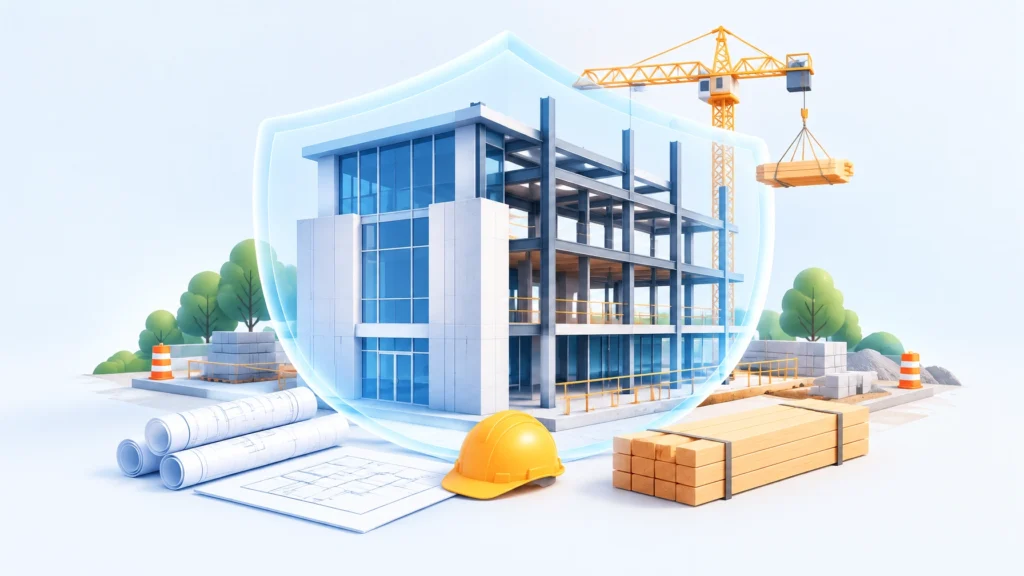
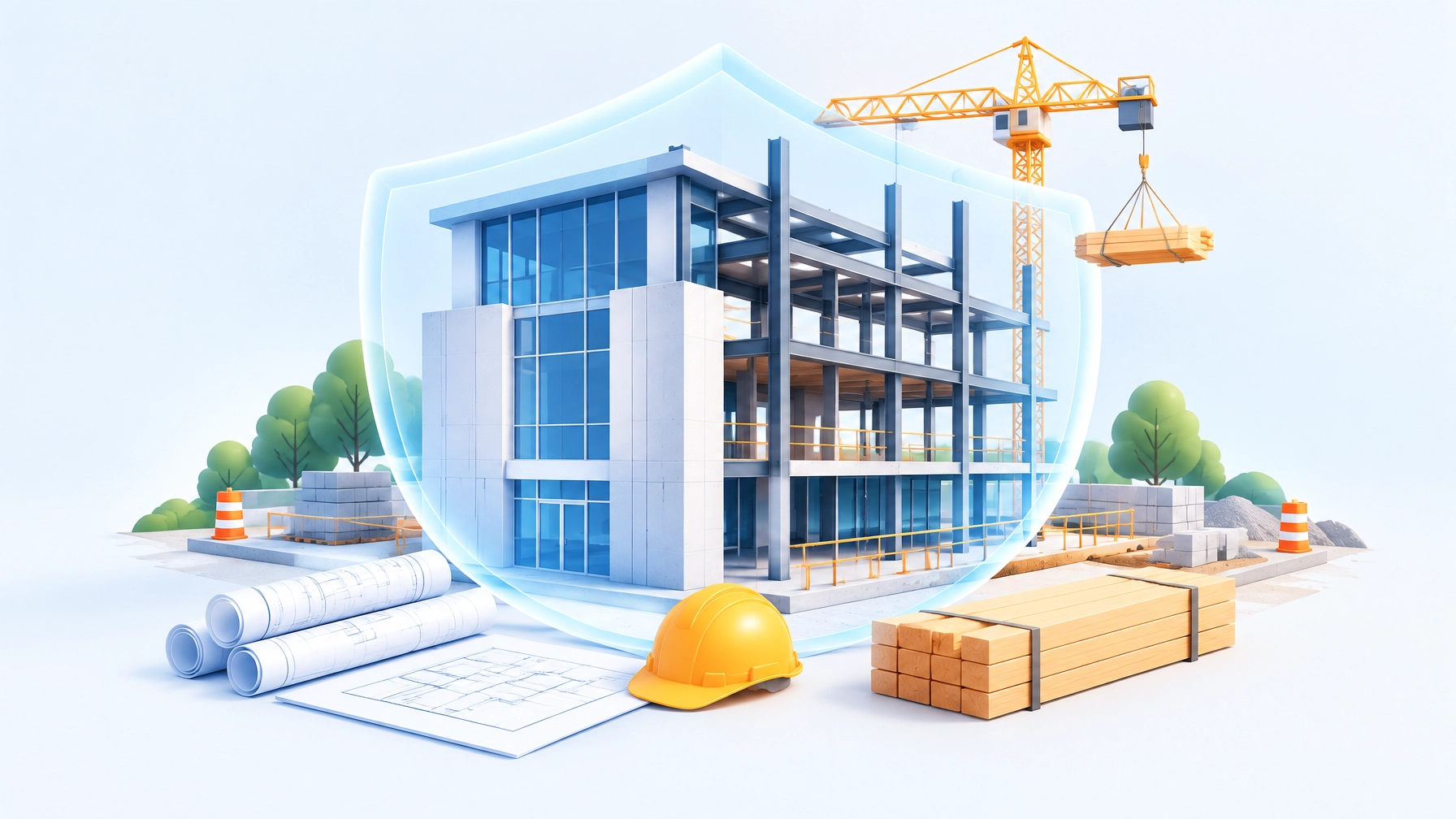
Builder’s risk insurance protects the physical project while it is being built or renovated. Construction insurance is a broader term that may describe the complete insurance program supporting the project, including builder’s risk, liability, equipment, professional liability, and other specialized coverages.
The two are not always alternatives. In many cases, builder’s risk is one important part of a broader construction insurance program.
Understand the Difference. Protect What Matters.
| Coverage | Main purpose | Commonly protects |
|---|---|---|
| Builder’s risk | Covers physical loss or damage during construction | The building, materials, temporary structures, and sometimes soft costs |
| Construction insurance program | Addresses the project’s broader risks | Property, liability, equipment, professional services, pollution, and delays |
The exact coverage depends on the policy wording, project details, insurer, and contractual requirements. A tailored review is important before construction begins, not after a loss occurs.
What Is Builder’s Risk Insurance?
Builder’s risk insurance, also called course of construction insurance, is a temporary property policy for a building project.
It is designed to protect the work in progress and may cover:
- The building or structure under construction
- Building materials and supplies at the job site
- Materials in transit or temporarily stored elsewhere, when included
- Scaffolding, hoarding, and other temporary works
- Certain construction equipment or temporary structures
- Fire, theft, vandalism, wind, and other insured perils
- Soft costs, such as additional professional fees or permit expenses, when added
- Delay-related expenses or delay in start-up coverage, when available and appropriate
Builder’s risk may apply to a new build, major renovation, commercial development, multi-unit property, or other qualifying construction project.
Coverage normally begins when construction starts and ends when the project is completed, occupied, or otherwise reaches the policy’s defined completion point. The transition to permanent property insurance should be planned in advance.
See What Builder’s Risk Does Not Cover
Builder’s risk is not designed to cover every construction-related problem. Common exclusions or limitations may include:
- Faulty workmanship itself
- Design errors or professional negligence
- General third-party liability
- Worker injuries
- Mechanical or electrical breakdown
- Pre-existing damage
- Certain types of water damage, vacancy, or weather-related losses
- Construction delays that are not caused by an insured loss
An insurer may cover resulting damage from an insured event even when the cost of correcting faulty workmanship is excluded. However, this depends on the policy wording and circumstances of the loss.
That is why a detailed coverage review is essential for your project.

What Does Construction Insurance Include?
“Construction insurance” is commonly used as an umbrella term. It can refer to the complete set of policies needed to protect a construction company, project owner, developer, contractor, or construction site.
Depending on the project, a construction insurance program may include:
Commercial General Liability
Commercial general liability, often called CGL, helps respond to claims involving bodily injury or property damage caused to others during business operations.
For example, it may address a third-party claim if a visitor is injured at a site or construction activity damages neighbouring property. CGL generally does not replace builder’s risk because it is designed primarily for liability, not damage to the project itself.
Wrap-Up Liability
A wrap-up policy can provide project-specific liability protection for multiple parties, such as the owner, general contractor, and subcontractors.
This structure may be suitable for larger or more complex projects because it can help create a coordinated liability program. Contract requirements, project size, and the number of parties involved will influence whether it is appropriate.
Contractor’s Equipment Insurance
Contractors may need protection for tools, machinery, generators, lifts, and other equipment used across different locations.
This coverage is separate from insurance for the building under construction. A project can have adequate builder’s risk while a contractor’s equipment remains underinsured or excluded.
Professional Liability
Architects, engineers, designers, and other professionals may need professional liability or errors and omissions coverage for claims arising from professional services.
Builder’s risk is not a substitute for this protection. Physical damage to a building and financial loss caused by professional advice are different insurance exposures.
Environmental or Pollution Liability
Excavation, demolition, mould, fuel, contaminated soil, and other environmental exposures may require specialized coverage.
The need for environmental insurance depends on the property, construction methods, history of the site, materials involved, and contractual obligations.
Excess or Umbrella Liability
Larger projects may require liability limits above those provided by a primary CGL or wrap-up policy. Excess or umbrella liability can provide an additional layer of protection, subject to its terms and exclusions.
Know When You May Need Each Policy
Choose Builder’s Risk When the Project Itself Is the Concern
Builder’s risk may be appropriate when you need to protect:
- A new building before completion
- A major renovation or addition
- Materials stored at or near the site
- Temporary works and construction-related property
- Certain soft costs following an insured loss
If your main question is, “What happens if the building or materials are damaged during construction?”, builder’s risk is likely the starting point.
Build a Broader Construction Program for Wider Protection
A broader construction insurance program may be more suitable when you need to address:
- Claims from members of the public
- Risks involving contractors and subcontractors
- Tools, machinery, and mobile equipment
- Design or professional services
- Pollution or environmental exposures
- Large liability limits
- Delays that affect financing, occupancy, or revenue
If your question is, “Are the project, people, operations, equipment, and third parties protected?”, you may need more than builder’s risk alone.
Compare Builder’s Risk in Alberta, BC, and Ontario
The fundamental purpose of builder’s risk is similar across Alberta, British Columbia, and Ontario: it is intended to protect the physical project during construction, subject to the policy’s terms.
However, project requirements can vary based on:
- Construction type and project value
- Location and exposure to weather, wildfire, flood, or theft
- Contract wording
- Financing or lender requirements
- Municipal approvals and permits
- The responsibilities assigned to the owner, contractor, and subcontractors
- Provincial workplace and construction requirements
- Whether the property is residential, commercial, industrial, or multi-unit
For example, a lender or project owner may require evidence of builder’s risk before releasing funds. A general contractor may also need ongoing CGL, contractor’s equipment, commercial auto, and other business coverage.
In Alberta, new home warranty requirements are separate from builder’s risk. A warranty may address certain defects after completion, while builder’s risk generally addresses physical loss or damage during construction. Similar distinctions should be considered for projects in BC and Ontario.
For local guidance, Alliance Insurance Associates can help you review Builder’s Risk AB, Builder’s Risk BC, or Builder’s Risk ON options based on your project and responsibilities.

Avoid These Common Coverage Gaps
Construction projects can change quickly. A policy arranged at the beginning may no longer reflect the risk several months later.
Review your insurance when:
- The project value increases
- Construction is delayed
- The completion date changes
- Materials are stored off-site
- The building will remain vacant longer than expected
- The scope of work expands
- A new contractor or subcontractor joins the project
- The ownership structure changes
- The building is partially occupied
- Construction changes from renovation to demolition or rebuilding
Also confirm who is responsible for arranging and paying for each policy. Depending on the contract, builder’s risk may be arranged by the owner, developer, or general contractor. Responsibility should be clear before work begins.
Ask contractors and subcontractors for current certificates of insurance, but remember that a certificate is not a complete review of the policy. Limits, exclusions, endorsements, and named insureds all matter.
Make an Informed Construction Insurance Decision
The simplest way to think about the difference is:
- Builder’s risk protects the project’s physical work in progress.
- Construction insurance protects the broader network of risks surrounding the project.
For many projects, the best approach is not choosing one instead of the other. It is coordinating builder’s risk with liability, equipment, professional, environmental, and other relevant coverages.
Every project is different. A small renovation, a commercial development, a multi-unit building, and a contractor’s annual operations can require very different insurance solutions.

Speak With a Construction Insurance Consultant
At Alliance Insurance Associates, we help individuals and businesses make informed insurance decisions with practical risk management guidance.
Our team can help you review your project location, construction value, contract requirements, timeline, contractors, materials, and potential liability exposures. We can also help compare tailored Construction Insurance AB, Construction Insurance BC, and Construction Insurance ON solutions through our access to insurance providers and carriers.
Before construction begins, request a commercial insurance review so you can move forward with greater clarity, confidence, and control.